
Cozumel Diving Guide
 Laura Schulthies
Laura Schulthies
Laura Schulthies Daniel Mode
Daniel Mode
Daniel Mode
Diving in Cozumel
Is Cozumel Good for Scuba Diving?
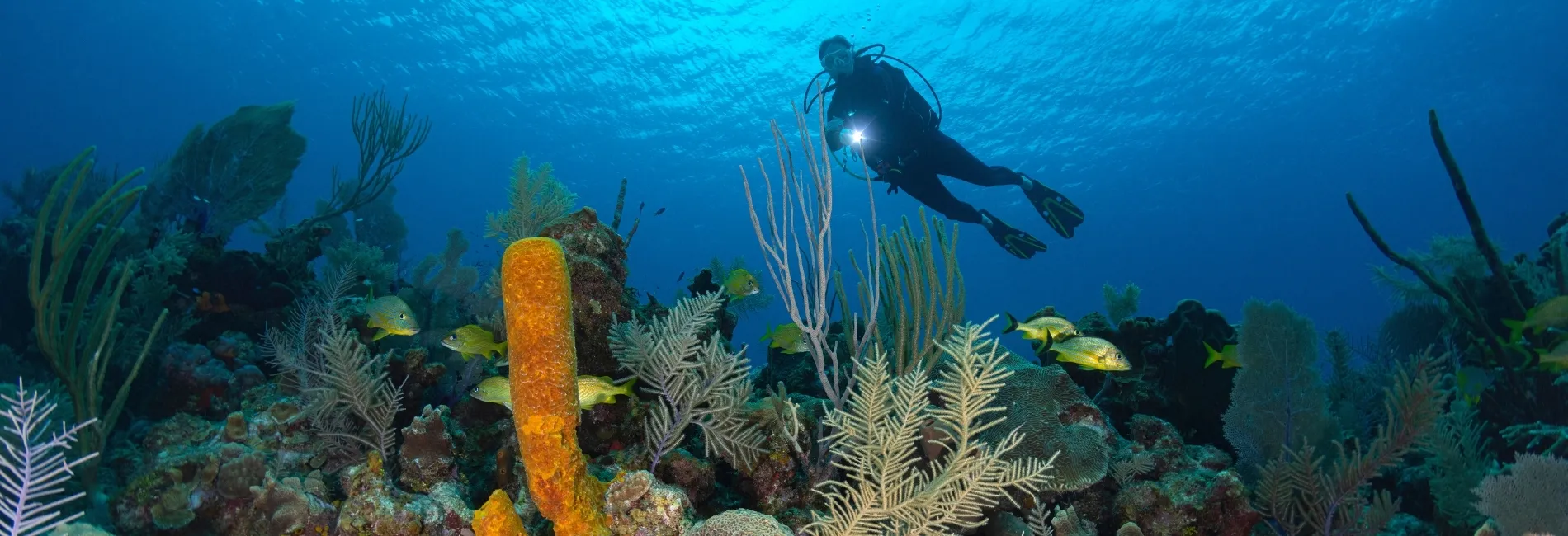
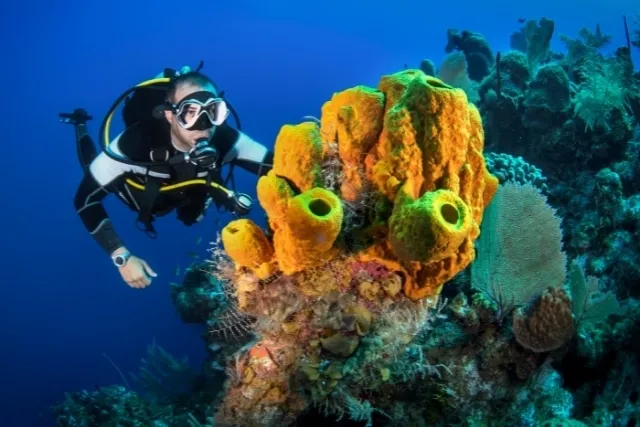
Cozumel is one of the best scuba diving destinations in the Western Hemisphere, featuring 40+ dive sites within a protected marine park, visibility that regularly exceeds 100 feet, and warm water (78-86°F) year-round. The island pioneered drift diving, and its easy currents carry you effortlessly past dramatic walls, coral cathedrals, and abundant marine life, including sea turtles, eagle rays, and nurse sharks.
We have been living and diving in Cozumel since 2019 and have logged dozens of dives around the island. In this all-in-one Cozumel Diving Guide, we’ll explore the island’s best dive sites, seasonal conditions and marine life, travel tips for visitors, and FAQs to help you plan an unforgettable underwater adventure. Let’s dive in!
This article may contain affiliate links. If you click on our links, we may earn a small commission at no extra cost to you. This helps us continue to offer free travel guides, but does not influence our recommendations in any way.


Palancar Reef (Gardens, Caves & Horseshoe)
Depth: Ranges from ~33 ft in the Palancar Gardens shallows to ~90 ft at Palancar Caves/Horseshoe.
Marine Life: Turtles, groupers, angelfish, and barracudas are common. The coral formations here are legendary – towering pinnacles, archways, and swim-through tunnels encrusted with colorful sponges and fans. Keep an eye out for the endemic Cozumel splendid toadfish hiding in crevices.
Conditions: Usually mild currents and excellent visibility (100+ ft is common on clear days). The gentle drift makes it a relaxing “underwater ride.”
Who we think it’s best for: Palancar Gardens is ideal for beginners and intermediate divers due to its shallower depth and calm conditions. Palancar Caves and Horseshoe are deeper with overhead environments, better suited for intermediate to advanced divers confident with buoyancy control. Even so, any certified diver can enjoy Palancar with a good dive guide – just choose the section that fits your experience.
Insider Tip: Don’t rush! Palancar is huge and composed of multiple sites, so many divers do several dives here to experience its different sections. Drifting slowly through Palancar’s coral canyons, you’ll feel like you’re flying in a living cathedral. On sunny days, the light beams and coral scenery are absolutely breathtaking.
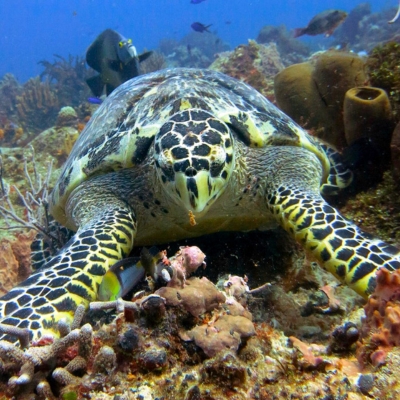
Palancar Reef
Santa Rosa Wall
Depth: Starts around 50 ft and then drops off dramatically into the abyss (the wall extends well beyond recreational limits). Most divers stay between 60–90 ft on this site.
Marine Life: One of Cozumel’s most iconic deep dives. You might spot large sponges, sea fans, and schooling fish along the wall. Sea turtles are frequent visitors, and in winter keep an eye out for spotted eagle rays passing by in the blue. Colorful reef fish like queen angelfish, parrotfish, and triggerfish hug the wall’s contour.
Conditions: Mild to moderate current that typically runs northward along the wall – perfect for a exhilarating drift dive. Visibility is superb (often 30m+). The current here means you just glide effortlessly, but it can be a bit stronger on some days (listen to your dive briefing).
Who we think it’s best for: Intermediate to advanced divers. Santa Rosa’s depth and overhead blue water require good buoyancy and comfort with drift diving. It’s a must-do “bucket list” dive for experienced divers. Confident beginners accompanied by a pro have dived it, but generally it’s recommended to get a few shallow dives in first before tackling Santa Rosa Wall’s depths.
Personal experience: The first time I gazed over Santa Rosa Wall’s edge, it felt like hovering on the edge of infinity – the reef drops vertically beneath you, and a gentle current carries you along like a soaring eagle. I’ll never forget drifting past giant barrel sponges and seeing a turtle gliding effortlessly off the wall’s edge. If you love dramatic seascapes, Santa Rosa will steal your heart!
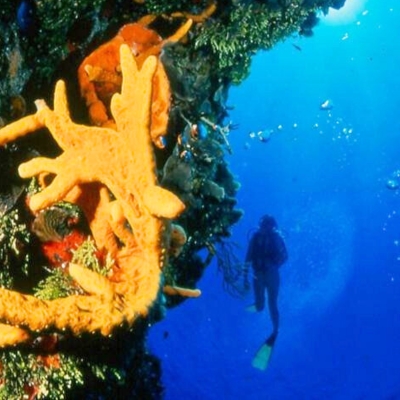
Santa Rosa Wall
Columbia Reef (Deep & Shallows)
Depth: Columbia Deep (also called Columbia Wall or “Colombia Cordillera”) is ~70-80 ft, featuring another impressive wall. Columbia Shallows is 20-40 ft – one of the best shallow dives on the island, often done as a second tank.
Marine Life: Columbia Deep offers huge coral buttresses and swim-throughs frequented by turtles, nurse sharks, green moray eels, and occasionally eagle rays. Columbia Shallows, by contrast, is like a vibrant aquarium – expect thriving coral gardens with schools of sergeant majors, grunts, plus lobster, crabs, and maybe seahorses if you have keen eyes. The shallow sunlight makes corals burst with color.
Conditions: Generally gentle current (slightly stronger on the deep wall, mild in the shallows). Visibility is superb in both sites. The shallow portion can have a surge on windy days, but is usually calm.
Who we think it’s best for: Columbia Deep is intermediate (similar to Santa Rosa Wall, you should be comfortable around 70+ ft and in mild current). Columbia Shallows is fantastic for beginners, photographers, and anyone who loves a long, lazy shallow dive (you can easily spend 60+ minutes among the corals at 30 ft). Many divers say Columbia Shallows is their favorite second dive in Cozumel – it’s that beautiful!
Personal experience: On a sunny afternoon dive at Columbia Shallows last July, our divemaster suddenly stopped and pointed at what looked like just another piece of coral. There, perfectly camouflaged and no bigger than my thumb, was a tiny seahorse wrapped around a sea fan. I hovered there for five minutes, mesmerized. The sunlight at that shallow depth made everything glow. The corals were practically neon, schools of blue tangs swirled around us, and the water was so clear I could see our boat 30 feet above. Columbia Shallows is special because of a thousand tiny perfect details you only notice when you slow down.
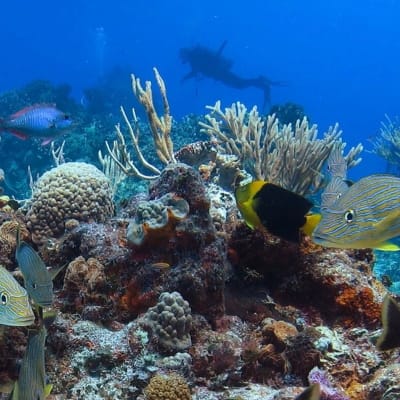
Columbia Reef
Wreck of the C-53 “Felipe Xicotencatl”
Depth: ~80 ft to the sand bottom. The top of the wreck (the superstructure) is around 40-50 ft.
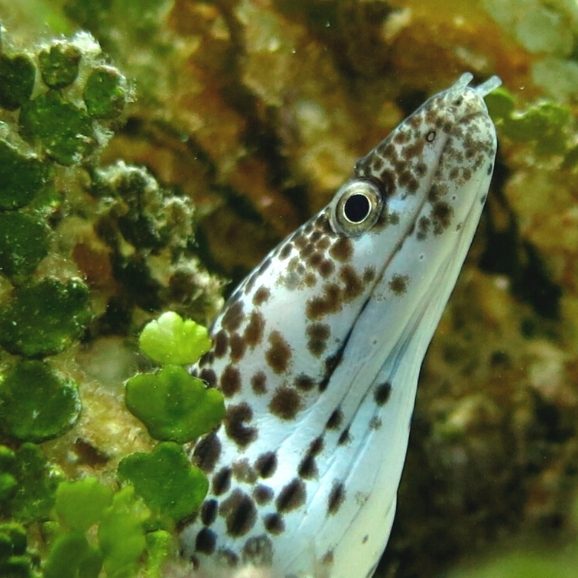
Marine Life: The C-53 minesweeper, sunk as an artificial reef in 2000, is now home to spotted moray eels, octopus, barracuda, schooling grunts, and lots of blennies and gobies tucked into crevices. Divers often find resident nurse sharks snoozing under the hull and occasionally an eagle ray cruising by. The wreck has some growth of corals and sponges and is a great place to observe how marine life colonizes a sunken ship.
Conditions: Usually minimal current at the wreck site (it’s somewhat sheltered near Chankanaab Park). Visibility ~80-100 ft. The interior is safe and open for those with training – large access holes have been cut for easy entry. It’s a fun, straightforward wreck dive with mild conditions on most days.
Who we think it’s best for: Intermediate divers. Open Water divers can dive the C-53 (it sits within recreational limits at 80 ft), but you’ll enjoy it more with good buoyancy skills. Penetration of the wreck’s interior passages is typically reserved for those with Advanced/Wreck training or under instructor supervision. If you’re an experienced diver, definitely peek inside – you can swim through halls and compartments seeing the light beaming through cutouts (a very cool feeling!). Beginners who are comfortable in open water can circle the exterior of the wreck no problem – it’s an easy site when conditions are calm.
Fun fact: The C-53 wreck is a former US Navy ship given to the Mexican Navy. Now it rests as an underwater playground for divers. It’s also often used for training Advanced Open Water courses (for the deep dive or wreck dive module). Bring a flashlight to look into nooks and crannies – you might spot a shy toadfish or a big crab hiding inside.
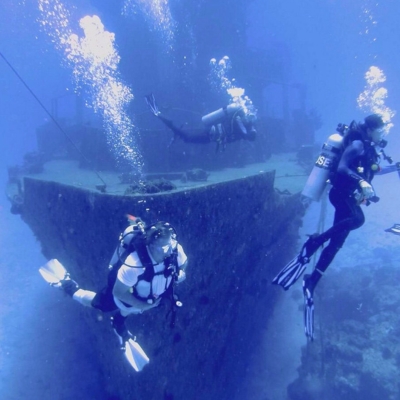
Wreck of the C-53
Punta Sur & Devil’s Throat
Depth: 90–130 ft (Devil’s Throat exit ~130 ft). Punta Sur reef, in general, starts around 60 ft.
Marine Life: This site is famous for the “Devil’s Throat” – an advanced deep swim-through that drops you from a coral cave out onto a sheer wall around 130 ft. Marine life includes black coral formations, reef sharks or rays on occasion, and deep-water fish like cubera snapper. Given the depth, you’re here more for the topography and adrenaline than lots of critters. That said, divers often see big creatures in the blue at Punta Sur (reef sharks, eagle rays) and turtles around the shallower reef.
Conditions: Usually moderate current and sometimes down-currents or unpredictable conditions due to the exposed southern location. Visibility is excellent, but the depth and overhead environment make this one of Cozumel’s most advanced dives. It’s also only accessible when weather and currents cooperate (often a special trip).
Who we think it’s best for: Advanced experts only. Most dive operators require an Advanced certification and a minimum number of logged dives to attempt Devil’s Throat. You need excellent air consumption and buoyancy control to do the deep tunnel safely. If you fit the profile and conditions are right, it’s a thrill – a true “rite of passage” dive for Cozumel aficionados. Beginners and intermediates should stick to the shallower reefs until they gain more experience.
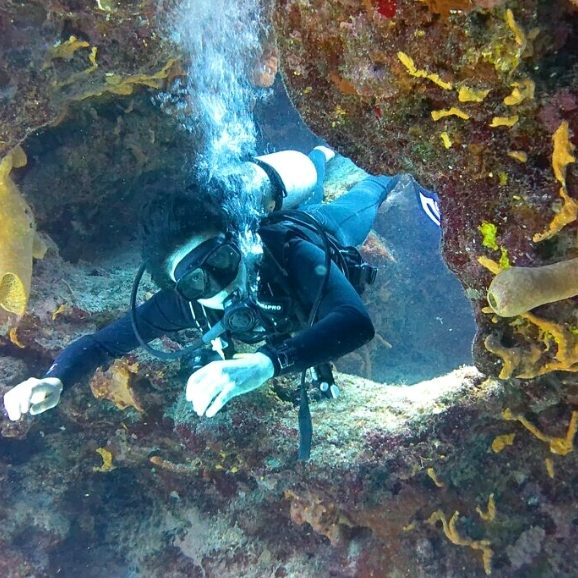
Devil’s Throat
Other Top Cozumel Dive Sites
- Paso del Cedral (Cedral Wall): An intermediate-depth reef (~50-70 ft) known for its swim-throughs and abundant marine life (nurse sharks, green morays, big grunts and snappers). Great middle-of-the-road dive with mild currents – many divers love Cedral for its probability of shark encounters.
- Tormentos & Yucab: Two mid-depth reefs (~50 ft) often done as pair of second dives. They have a faster current, so you’ll zoom over a low-profile reef that is teeming with life. Expect spotted moray eels, lobsters, and endless schools of fish. It’s a fun ride!
- Paradise Reef: A shallow reef (20-40 ft) very close to the cruise piers, popular for night dives and beginner checkouts. Calm water, gentle current. At night, Paradise comes alive with octopuses, Spanish lobster, eels, and the endemic splendid toadfish’s eyes peeking out of holes. Great for a first night dive.
- Barracuda Reef (North): An advanced, rarely-dived site on the north end of the island. Expect very strong currents only for expert drift divers. Those who go (usually in winter) aim to see larger pelagic life – reef sharks, big schools of barracuda and jacks, and sometimes hammerhead or bull sharks have been reported. Due to unpredictable currents, it’s for seasoned divers with a reputable guide only.
Personal experience: During a December 2023 dive at Paso del Cedral, we were drifting at about 65 feet when our divemaster pointed excitedly at a ledge. There, tucked underneath, was a massive nurse shark, easily six feet long. We hung in the current, watching this gorgeous creature rest. After about three minutes, the shark slowly pushed off the sand, glided right past our group within arm’s reach, and disappeared into the blue. That’s when I realized Cozumel isn’t just about pretty reefs. It’s about being a guest in an ecosystem where these animals live their daily lives.


Recommended Cozumel Dive Shops
One of the most common questions we get is “Which dive shop should I go with in Cozumel?” The truth is, Cozumel has many excellent operators as competition has driven up quality. We have a few favorites that align with the Island Life Mexico values of safety, personal service, and sustainability. All of these shops have great reputations, bilingual staff, and are very friendly to both novice and seasoned divers.


“Nothing makes us happier than sharing underwater moments with our guests!” This is the mantra of the incredible Cozudive team. When you love what you do, it shows. Cozudive strives to make each dazzling dive experience a chance for their guests to have fun, but also to become a more improved, confident diver. By only having small groups, they can make sure everyone gets the attention they deserve. So, whether you are just starting your dive journey or consider yourself an old pro, you can feel comfortable with Cozudive’s experienced team. Did we mention they also speak English, Spanish and French!
Setting themselves apart even more, Cozudive provides a delicious, fresh lunch on board so you can refuel and be ready to get back into the glorious blue. When choosing Cozudive you will arrive a customer and leave as family.


When two friends passionate about the ocean teamed up to open a dive shop, Cozumel H2O was born. Loes and Miguel of Cozumel H2O have dedicated their lives to showing others the beauty that lies below the surface. The Cozumel H2O dive instructors have an incredible talent of spotting marine life, making your dive experience that much more thrilling. Of course, your safety and comfort are always a priority for the team in and out of the water which is why they only take small groups. Chances are, you may even learn a thing or two, and emerge a better, more knowledgeable diver.
If you want to learn more, Cozumel H2O offers all scuba courses, from a discover scuba outing to open water to dive master. If you have a group of divers and snorkelers, Cozumel H2O can accommodate everyone on the same boat. Ensuring your whole group has a chance to enjoy the day together. Whether you opt for a single day outing, or a multi-day dive package with Cozumel H2O, every dive will be enchanting and unforgettable.


Ray Diving is one of the top-rated outfitters for a reason… Ray! Ray has been diving in Cozumel for 20+ years and knows these reefs as well as anyone. Ray Diving Cozumel has been and always will be 100% personalized. Specializing in small groups of no more than 4, Ray strives to make each dive fit your wants and needs. He makes your trip even more intimate by avoiding heavily populated sites as much as possible.
Ray’s incredible experience and attention to detail create a rewarding and safe dive trip for you and your family or friends every time. Living and working by his personal philosophy that “personalized service is the best experience” Ray Diving Cozumel will provide you with the exclusive dive trip you never knew you always wanted.
Island Life Mexico Tip: Always communicate your skill level and any special requests with your dive operator. All our recommended dive shops are very accommodating – whether you want a shallow, easy reef or a fast drift through advanced sites, they’ll make it happen.


Cozumel Travel Tips for Divers
Planning your Cozumel dive trip involves a few logistics beyond just diving. Here are essential travel tips, especially for those coming from the United States or Canada. Be sure to download our free Cozumel Dive Planning Checklist here.
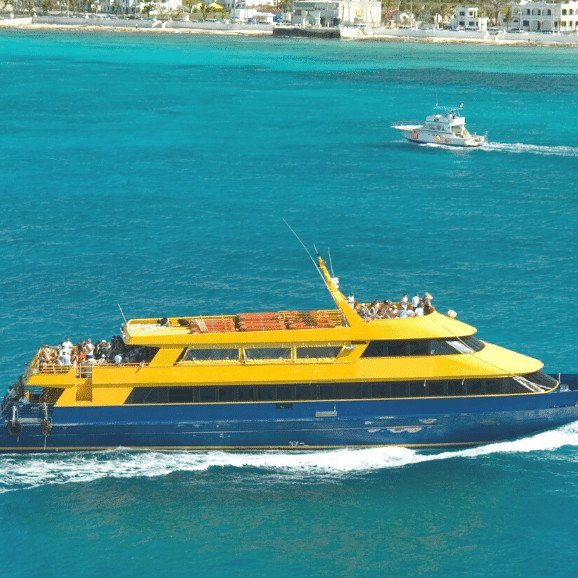
How Do I Get to Cozumel for a Dive Trip?
You have two main options to get to Cozumel. Fly directly into Cozumel’s international airport (CZM) or fly into Cancun (CUN) and then transfer to Cozumel via land and then ferry. There are nonstop flights to Cozumel from several U.S. hubs (Miami, Houston, Dallas, Charlotte, etc.) and often seasonal direct flights from cities in Canada (Toronto, Montreal) during winter. Direct to Cozumel is super convenient and lands you just minutes from downtown.
From the Cancun airport to the Playa del Carmen ferry pier is about 50 minutes by road (you can take an ADO public bus, private shuttle, or taxi). Then the ferry crossing is about 30-45 minutes. Ferries run nearly every half hour from early morning into the evening, operated by Ultramar, Winjet or Xcaret. The ferry is comfortable and diver-friendly.
Insider Tips: There are three ferry companies alternating departures and there’s no need to buy ferry tickets in advance. Just go to the ferry terminal in Playa Del Carmen and buy a one-way ticket on whichever ferry company is leaving next. If you’re prone to seasickness, take motion sickness meds and sit on the lower deck center. Most days the channel is calm, but it can be choppy if winds pick up.
Getting Around on the Island
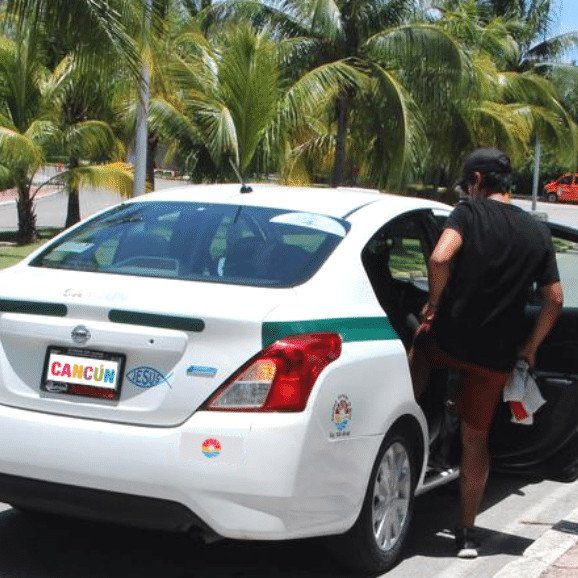
Cozumel is relatively small. Taxis are plentiful and not too expensive (agree on a rate before you get in; most routes in town are $5-$10, further south to resorts maybe $15-$30). If you stay at a resort out of town, you might end up taking taxis or shuttles to town occasionally. Some people rent cars – driving is easy, just watch for speed bumps (“topes”). Scooter rental is popular, but not recommended – there are many scooter accidents with tourists. Only rent one if you’re experienced and always wear a helmet. For most divers, taxis and hotel shuttles suffice. Bike rentals or walking are options if you stay in town (it’s safe and enjoyable to stroll the waterfront).
Should I Bring My Dive Gear Or Rent It There?
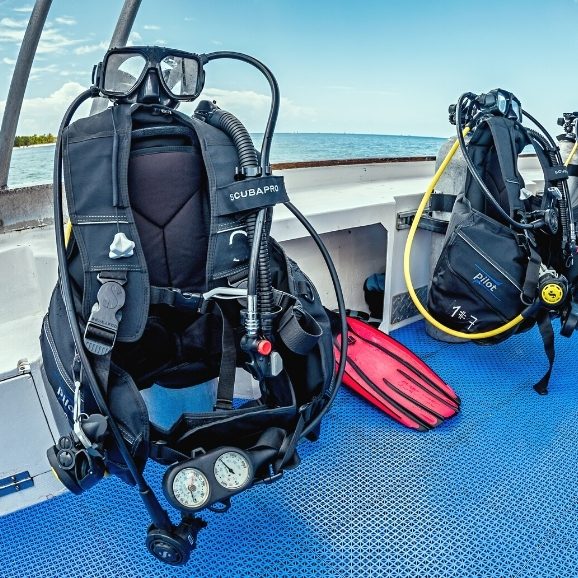
Cozumel dive shops provide quality rental gear if you prefer to pack light. Typical full gear rental runs $20-25/day. The benefit of renting: less gear to lug through airports. Downside: you might not be as comfortable as with your own well-fitted gear. Our suggestion: bring your personal essentials (mask, snorkel, fins if you have lightweight ones, and maybe your dive computer for familiarity). Wetsuit choice depends on season – a packable 3mm full suit is versatile for Cozumel year-round. Regulators and BCDs can be rented from all reputable shops – they’re required to maintain them. If you do bring your own reg and it’s DIN, bring a yoke adapter (Cozumel tanks are yoke valves by default). Don’t forget save-a-dive kit items (spare mask strap, O-rings, defog).
Travel Documents
All visitors need a valid passport that is valid through your travel dates. No visa is required for tourist stays from the U.S. and Canada. You may receive a tourist permit (FMM) on the plane or at immigration. Be sure to keep the little paper slip if they give you one, as you’ll need to hand it back upon departure. As of 2026, some airports have moved to electronic FMM, but just follow what the officials say. Always carry your passport and dive certification card on your person when traveling.
Currency & Money
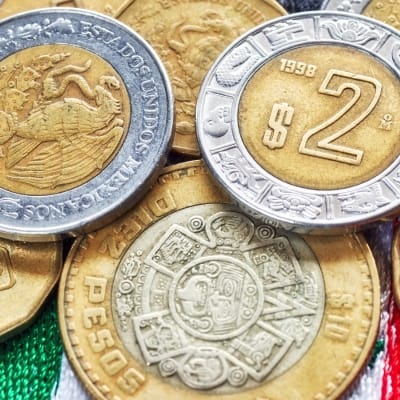
The local currency is the Mexican Peso (MXN). However, Cozumel businesses widely accept U.S. dollars, especially for dive services, tips, etc. That said, you often get a better deal paying in pesos (the exchange rate shops use might not be the best). It’s a good idea to withdraw some pesos from an ATM on the island for taxis, small eateries, and tips. Credit cards are accepted at many dive shops, resorts, and restaurants, but some smaller businesses are cash only. The marine park charges an access fee each day (currently about 90 MXN pesos ($5 USD) per day), but most operators include this in their price. Others may ask you to pay separately in cash. Note: a planned fee increase could raise it to roughly $10 per day, so double-check the latest rate.
Tipping your dive crew is customary. Typically, about 10-15% of your dive package or $5-10 per tank per diver is a common range if you were happy with the service. They work hard hauling gear and ensuring you have a great time. Also, tip the boat captain if separate.
Helpful Tips: Notify your bank/credit card that you’re traveling to Mexico to avoid blocks. At ATM’s it is always best to accept the fee but decline the conversion. Your bank at home will give you a better conversion rate. Also, try to bring small bills (USD 10’s or 20’s, or 100/200 peso notes) for tipping boat crew, etc., since making change on boats is hard.
Health & Safety
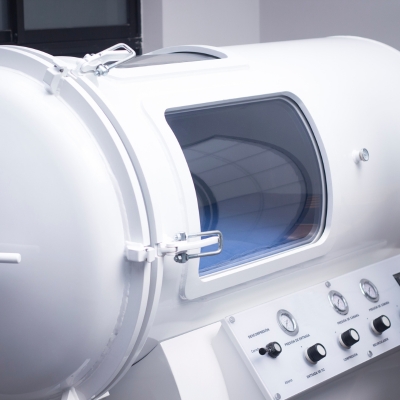
It’s typically wise to have dive insurance (e.g. DAN – Divers Alert Network) that covers any dive-related medical care or evacuations. Cozumel does have a hyperbaric chamber and decent medical facilities for a small island, but insurance saves you from hefty bills in the unlikely event you need it. Drink bottled water (most resorts provide it; restaurants use purified water/ice). Use reef-safe sunscreen to protect the ocean. And of course, practice good dive safety – stay hydrated, don’t push your no-deco limits, do a refresher dive if it’s been a while since your last dive, etc. Cozumel’s emergency services are reliable, and the dive community is tight-knit and safety-conscious.
Language & Local Culture
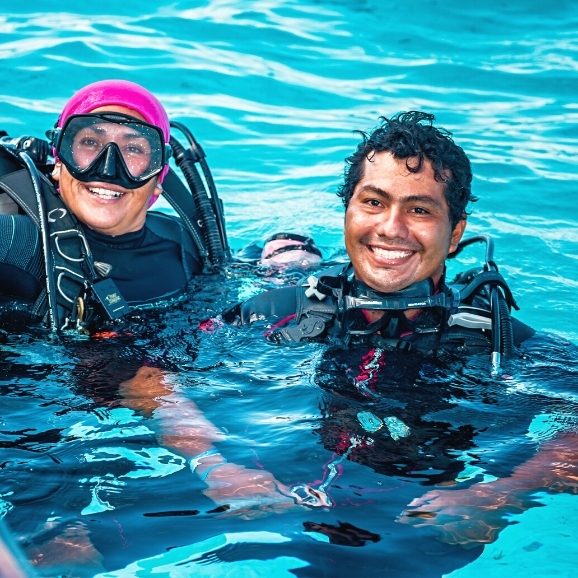
While Spanish is the local language, you’ll find that in Cozumel’s dive industry, English is widely spoken (many dive masters and instructors are expats or bilingual locals). Still, learning a few basic Spanish phrases is appreciated. The island culture is friendly, laid-back, and very welcoming to divers. You’ll often hear “¡Buen buceo!” (good diving) or “¿Cómo estuvo la inmersión?” (how was the dive?) from locals after your trip. Embrace it – Cozumel lives and breathes diving.


Cozumel Dive Training & Certification
Interested in learning to scuba dive or advancing your certifications? Cozumel is a fantastic place to do it. The island’s warm, clear water and abundant reef life provide a beautiful classroom, and all of the above recommended dive shops offer certification instruction as well. Below, we cover common dive training options – from easy beginner experiences to pro-level courses.
- Discover Dives: If you’re brand new to diving, you can start with a Discover Scuba Diving experience (also called an intro or resort dive). This one-day experience lets you try diving in shallow water with an instructor – no certification needed.
- Open Water Certification: For those ready to get certified, the PADI or SSI Open Water Diver course is the standard entry-level certification that allows you to dive independently (with a buddy) up to 18 m/60 ft. Open Water courses in Cozumel typically take 3-4 days and include pool practice, four open-water dives, and some self-study.
- Advanced Open Water & Rescue Diver: Once certified, you can continue with Advanced Open Water, a short course (usually 2 days) involving five adventure dives (like deep diving, navigation, night diving, etc.) to broaden your skills and raise your depth limit to 30 m/100 ft. Going further, the Rescue Diver course (generally 2-3 days) is a highly rewarding program that teaches you to prevent and manage dive emergencies. Many say it’s the most challenging and fun course they’ve done.
- Specialty Certifications: And let’s not forget Specialty certifications. Cozumel dive shops offer a variety of specialties such as Enriched Air Nitrox (learn to use oxygen-enriched air for longer bottom time), Peak Performance Buoyancy (master your buoyancy skills – great for drift diving here), Night Diver, Wreck Diver, Drift Diver, Underwater Photography, and more. These specialty courses usually take 1-2 days each, and they’re a great way to enhance specific skills or explore new types of diving.
Island Life Mexico Tip: If you’re short on time but want to get certified, consider doing the book study or e-learning portion of your course before your trip. Many Cozumel dive shops, like Aquadventures and Cozumel H2O, offer PADI eLearning options. This way, you can complete the theory online at home, then do your confined water and open water dives here on the island. It saves vacation time for actual diving – plus, who wouldn’t prefer doing homework on a couch rather than on a beach?


Best Cozumel Dive Resorts
Due to the popularity of diving in Cozumel, there are many dive resorts to choose from. Many of the higher end resorts have in-house dive companies who can’t wait to help you plan the best dive vacation of your life. Most offer 3-7 day dive packages with two to three dives per day. Be sure to check out our Cozumel Hotel Guide and our Best Cozumel All Inclusive Resorts Guide.
This affordable boutique hotel is just south of town and has an onsite dive shop.
Casa Del Mar Cozumel Hotel and Dive Resort
Affordable mini resort option south of town with an onsite dive shop.
Coral Princess Golf & Dive Resort
Just north of town, this midrange hotel has an onsite dive shop. The golf course is now closed.
Intercontinental Presidente Cozumel Resort & Spa
This 5 star luxury resort just south of town offers an onsite dive shop.
This 5-star all-inclusive resort has a dive shop within short walking distance.
This family friendly affordable all inclusive resort has an onsite dive shop.
This 5-star adults only all inclusive resort has an onsite dive shop.


Frequently Asked Questions
Q: Do I need to be an experienced diver to enjoy Cozumel?
A: Not at all! Cozumel caters to all levels. If you’re a beginner, there are plenty of shallow, easy reefs (and excellent instructors) to get you comfortable. In fact, many people do their very first ocean dives here. Just start with beginner-friendly sites and perhaps avoid the really deep walls until you have a few dives under your belt. Experienced divers, on the other hand, will find no shortage of challenges – think advanced drift dives and deep pinnacles. Cozumel truly offers a gradient of difficulty: from calm coral gardens to adrenaline-pumping drifts.
Q: What is drift diving and will I have trouble with it?
A: Drift diving is when the current carries you along the reef, and the boat picks you up at the end of the dive. In Cozumel, virtually all dives are drift dives. The good news is it’s sometimes called a “lazy river”, since you usually don’t have to fin much at all! For most people, drift diving in Cozumel is a breeze, and they come to prefer it. You simply control your buoyancy and let the water do the work. If the idea makes you nervous, let your divemaster know – they’ll keep a closer eye on you. Always stay with the group (don’t fight the current by trying to stay in one spot). If you need to stop to see something, you can duck behind a coral head or into an eddy. The currents range from gentle to moderate; only a few sites have strong currents, and those are for advanced divers. In summary, drift diving is fun and easy for the vast majority of visitors, plus no long swims back to the boat!
Q: When is the best time of year to dive in Cozumel?
A: Honestly, there’s no bad time. Year-round diving is possible and each season has its highlights. Winter (Dec–Feb) has cooler water (~78°F) but brings the amazing spotted eagle ray gatherings and generally superb visibility. Spring (Mar–May) offers warm water (80°F), calm seas, and lots of marine life activity – excellent conditions overall. Summer (Jun–Aug), the water is toasty (84°F), with tons of marine life (corals spawn, turtles nesting), but also the heat/humidity and a chance of storms late summer. Fall (Sept–Nov) can have the fewest crowds and still-warm water, though early fall is hurricane season (cheaper rates but some risk). Many veterans love late November as a sweet spot: water 80°F, eagle rays just starting, and nice weather. If we must pick “prime conditions,” maybe late Feb-March (for rays + good weather) or July (for warm water + calm seas). But truly, you can have an epic trip in any month. Consider what you want to see and your tolerance for heat or crowds, then choose accordingly.
Q: What thickness wetsuit do I need?
A: It depends on when you go and your cold tolerance. In winter, most divers use a full 3mm wetsuit; some who get cold easily wear 5mm. In summer, many are comfortable in a shorty or even just a lycra skin with maybe a 1mm top – the water is very warm. We recommend a full suit year-round (even if thin) to protect from accidental brushes with coral or hydroids. You can always let some water into your suit if you’re hot, or add a hood if you’re cold. If doing multiple dives per day over a week, you might chill more by the end, so err on the side of slightly warmer.
Q: What marine life can I expect to see? Will I see sharks?
A: You’ll definitely see a rainbow of reef fish (angelfish, parrotfish, butterflyfish, wrasses, groupers), plus loads of critters like lobster, crabs, eels, and rays. Turtles are almost guaranteed – Cozumel has a healthy population of hawksbill and green turtles year-round. Nurse sharks are commonly spotted napping under ledges (they are docile). Reef sharks (Caribbean reef sharks) are not very common in Cozumel’s main dive sites (more common at remote sites or sometimes Columbia Deep), but possible. For “big sharks,” Cozumel itself isn’t known for them aside from the occasional sighting. However, bull sharks reliably congregate off Playa del Carmen (mainland) in winter, and some divers do that excursion. Eagle rays we’ve mentioned – winter highlight, especially Jan/Feb. Splendid toadfish – only in Cozumel, ask your divemaster to help find one in its den (listen for their croaking sound). Octopus – seen on night dives mostly (summer/fall are great for octopus). Seahorses – can be found on some shallow sites like Paradise or near wreck, but require a keen guide. So, sharks are the most “missable” – if you really want sharks, consider a trip to Playa for the bull shark dive (winter) or ask ops that sometimes see reef sharks (maybe Barracuda reef in summer). Otherwise, come for the overall marine biodiversity – Cozumel’s reef life is extremely rich and colorful.
Q: Are Cozumel dive operators okay with junior divers / less experienced divers?
A: Yes, Cozumel is very family-friendly for diving. Most operators will take kids as young as 10 (the minimum certification age) on suitable dives. Junior Open Water divers (ages 10-11) are limited to 40 ft depth, and operators will stick to that, taking them only to shallow sites. Ages 12-14 (Junior OW) can go to 60 ft with a guide. Let your shop know in advance if you have juniors – they’ll likely schedule you on a boat with an easy profile. For inexperienced adults, the dive ops will often put an extra divemaster in the water if needed to give personal attention. Some even offer a refresher free or at a low cost if you haven’t dived in a while. Essentially, Cozumel dive pros are used to divers of all skill levels being mixed, and they handle it by choosing appropriate sites and staffing accordingly. As always, honesty is key – if it’s been years since you dived, say so and do a refresher, don’t be shy. They want you to have a safe, enjoyable time.
Q: Can I dive in Cozumel if I’m arriving by cruise ship for just a day?
A: Yes, many cruise passengers do a two-tank dive during their port stop in Cozumel. There are dive shops that specifically work with cruise schedules – they offer pickups near the cruise piers and slightly shortened trips to ensure you’re back on time. If your ship is in port for at least ~6-8 hours, you can usually fit in a morning two-tank dive (the boat will typically depart around 8:00-8:30am and return by 1-2pm). It’s crucial to coordinate with a reliable dive operator in advance and inform them of your ship’s schedule. They will advise what’s possible. Some even offer single-tank dives or private charters if timing is tight. Keep in mind rental gear sizing, bringing your C-card, etc. Also, ensure you build in a buffer – ship all-aboard times are strict, so don’t schedule an afternoon dive that cuts too close. Overall, it’s doable and commonly done – diving is arguably the best way to spend a Cozumel port day!
Q: What about nitrox, tanks, and other gear – anything special in Cozumel?
A: Standard tanks in Cozumel are AL80 (aluminum 80 cubic feet) with yoke valves. Many shops have Nitrox available (typically 32% O2) for certified divers – it’s wise to request in advance. A few shops (like Aldora) provide larger steel tanks by default. Most weights are the uncoated lead type, so consider wearing a thin neoprene belt or using weight pockets if you dive in just a swimsuit to avoid any lead residue (minor issue). Dive computers are not required by law but highly recommended – if you don’t have one, rent one; the profiles and multilevel nature of dives mean a computer maximizes safety and bottom time. All operators supply SMBs for their groups (guide carries one), but it’s good form to carry your own safety sausage and whistle. Cozumel’s boats often don’t have toilets, except the bigger ones, so plan bathroom breaks accordingly before you go. Lastly, marine park rules forbid gloves (to discourage touching). The only exception is if you’re doing a wreck dive where gloves might be allowed by a specific operator, but in general, no gloves or knives.
Q: How can I be a responsible diver in Cozumel?
A: We love this question! Being a good dive steward in Cozumel means:
- Maintain good buoyancy – don’t touch or bump the reef. The corals are protected and even a single fin kick can break decades of growth. If you’re struggling, signal your DM for help rather than crashing into coral.
- No touching or taking – leave all shells, artifacts, and creatures as you found them. It’s illegal to take marine life or even dead corals/shells from the marine park.
- Use reef-safe sunscreen – conventional sunscreen contains chemicals harmful to coral larvae. Switch to mineral-based (zinc oxide/titanium dioxide) sunscreen or wear UV protective clothing and apply sunscreen well before diving so it’s absorbed.
- Don’t feed or harass animals – it might be tempting to feed fish or coax a moray out for a photo, but it disrupts natural behavior and can make animals aggressive. Admire them in their element. Cozumel’s divemasters rarely, if ever, feed marine life (unlike some touristy spots).
- Mind your trash – secure any wrappers or plastic items. A windy boat can send that granola bar wrapper flying into the sea. Make sure nothing goes overboard.
- Tip your crew – this doesn’t directly affect the reef, but supporting the hardworking dive crews ensures they can continue providing great service and they have a vested interest in conservation (a well-paid DM is a happy DM who will continue protecting their reef!).
By following those guidelines, you’ll help keep Cozumel’s reefs healthy for generations to come. And we promise, the reward is worth it – these reefs are alive and spectacular thanks in part to the collective efforts of the dive community.
