
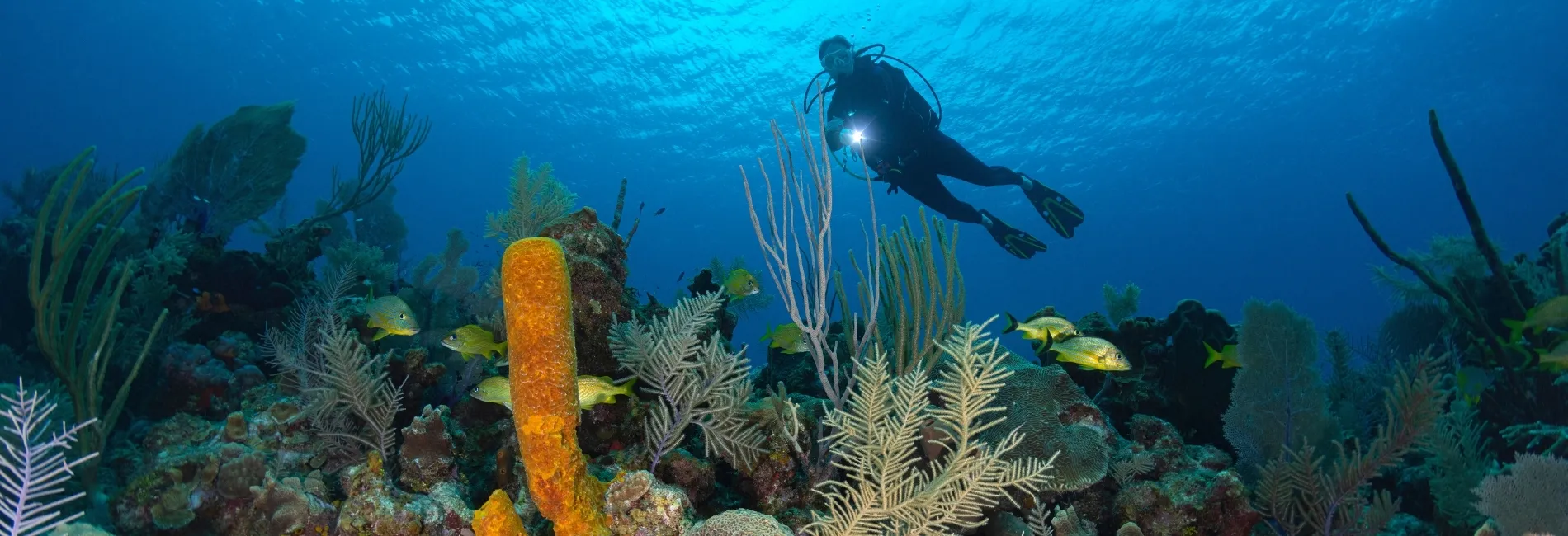
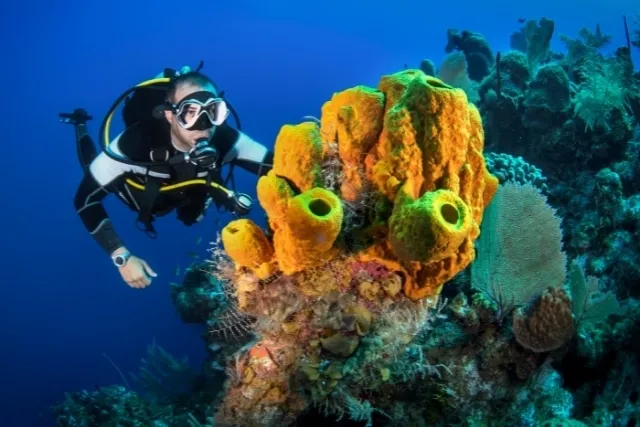
Cozumel Scuba Diving Guide for 2026
 Laura Schulthies
Laura Schulthies
Laura Schulthies Vanessa Howard
Vanessa Howard
Vanessa Howard
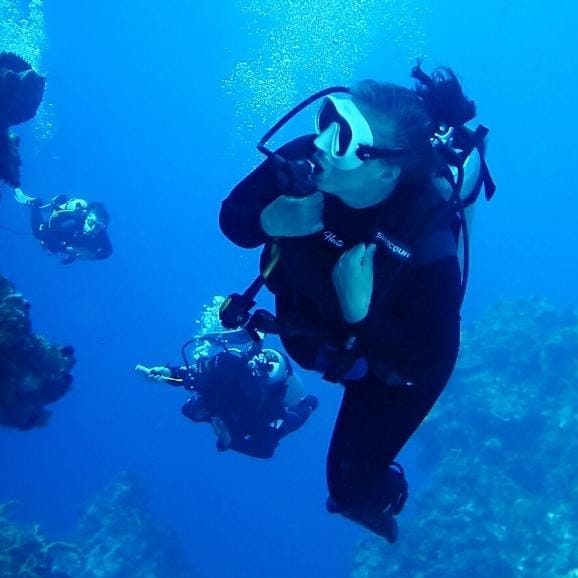
Diving in Cozumel
Quick Facts
- Best time to dive: November through May
- Water temperature: 75-86°F year-round
- Visibility: Typically 80-100+ feet
- Marine park fee: Around $12 USD per diver per day (2026)
- 2-tank dive cost: $80-135 USD
- Sunscreen: Non-biodegradable sunscreen banned
- Certification required: Yes for reef dives; Discover Scuba available for non-certified divers
- Liveaboards: None (prohibited by Marine Park regulations; all diving is done from day boats)
This article may contain affiliate links. If you click on our links, we may earn a small commission at no extra cost to you. This helps us continue to offer free travel guides, but does not influence our recommendations in any way.


Why Cozumel Is One of the World's Best Places to Dive
The short version: Jacques Cousteau visited Cozumel in the early 1960’s and declared it one of the finest diving destinations on the planet. He was not wrong, and more than six decades later, the reef still backs up that claim.
The slightly longer version involves geography. Cozumel sits on the edge of the Mesoamerican Barrier Reef, the second largest coral reef system in the world, stretching over 600 miles from the tip of the Yucatan down through Belize, Guatemala, and Honduras. The island’s protected western coast faces a narrow channel where the Caribbean current funnels through with unusual consistency, creating the drift diving conditions that made Cozumel famous. You drop in, the current catches you, and you spend 45 minutes floating effortlessly past coral formations, walls, and marine life without burning a drop of energy. It is the closest thing to flying that most people will ever experience.
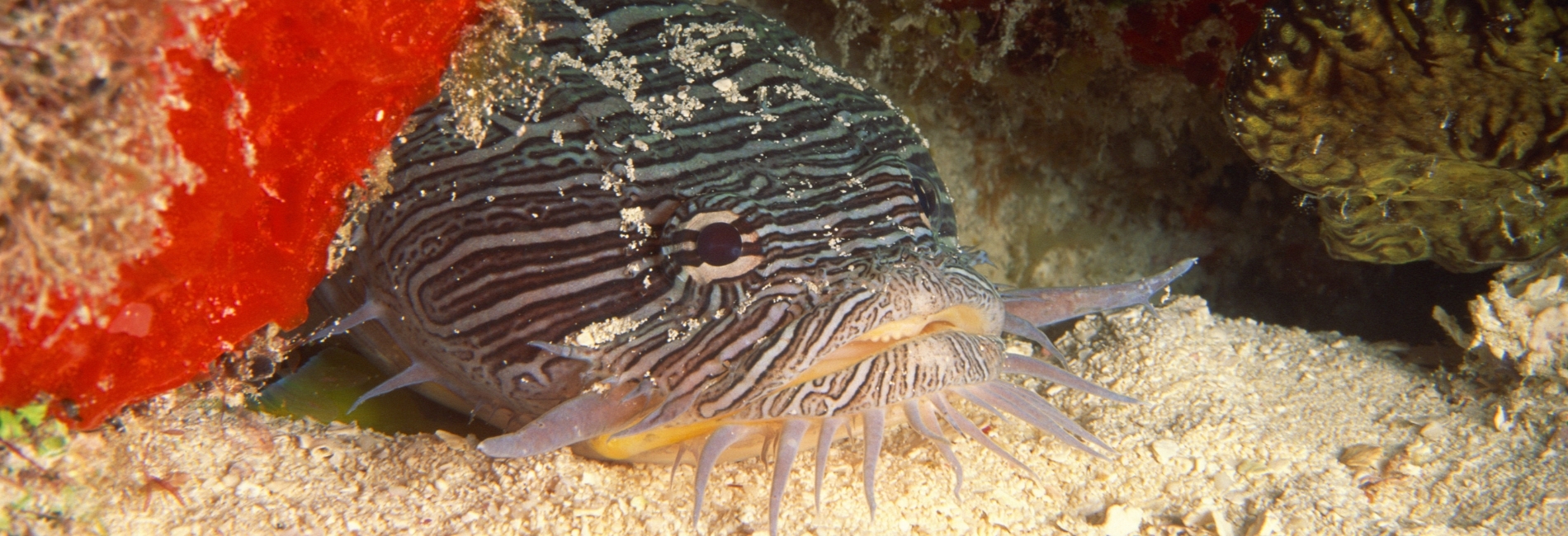
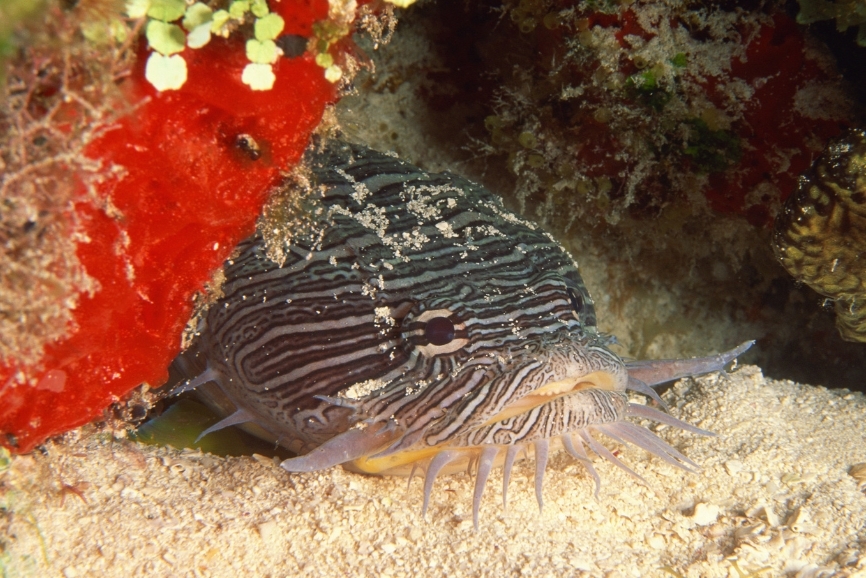
The numbers back up the reputation. Visibility regularly clears 100 feet, sometimes significantly more. Water temperature stays between 75 and 86°F year-round, warm enough that many divers are comfortable in a 3mm shorty for much of the year. The Arrecifes de Cozumel National Park protects over 29,000 acres of marine habitat, giving the ecosystem a level of conservation that shows in the density of marine life. The islands’ reefs have been documented with over 260 fish species and more than 100 coral types, including the splendid toadfish, a lumpy, improbable little creature found almost exclusively in Cozumel. If you dive Cozumel long enough, spotting one feels like the local secret handshake.
None of this happens by accident. The Marine Park enforces meaningful rules. No touching the reef, no anchoring on coral, no non-biodegradable sunscreen, and a rotating closure schedule that rests dive sites on a regular cycle. The result is a reef that actually looks healthy, which is not something every Caribbean destination can claim.
How Much Does Scuba Diving in Cozumel Cost?
Cozumel scuba diving is not the cheapest in the Caribbean, but it is genuinely good value given the quality of the reefs and the professionalism of the operators. Here is what to expect in 2026.
| Experience | Typical 2026 Cost | Notes |
|---|---|---|
| 2-tank boat dive | $80-135 USD | Includes guide, tanks, and weights |
| Marine Park fee | Around $12 USD/day | Paid per diver per dive day |
| Equipment rental | $20-25 USD/day | Full kit including wetsuit |
| Discover Scuba Diving | $100-150 USD | No certification required |
| PADI Open Water certification | $350-500 USD | 3-4 days |
| PADI Advanced Open Water | $250-400 USD | 2-3 days |
| Nitrox/Enriched Air upgrade | $10-15 USD/dive | Many shops include it for free |
| Night dive | $50-80 USD | Single tank |
Most dive operators in Cozumel prefer cash (USD or Mexican pesos) and add a credit card surcharge of 3-5% if you pay by card. The marine park fee is typically collected separately at the dock before your first dive of the day. Tipping your divemaster $5-10 USD per dive is standard and genuinely appreciated. These are the people who find the seahorses and the toadfish.
Multi-day dive packages generally offer better value than booking day-by-day. If you are planning three or more days of diving, ask your operator about package pricing before you commit to anything.
Palancar Reef (Gardens, Caves & Horseshoe)
Depth: 40-70 ft (Gardens) to 100+ ft (Caves/Horseshoe) Skill level: Gardens: beginner. Caves/Horseshoe: intermediate.
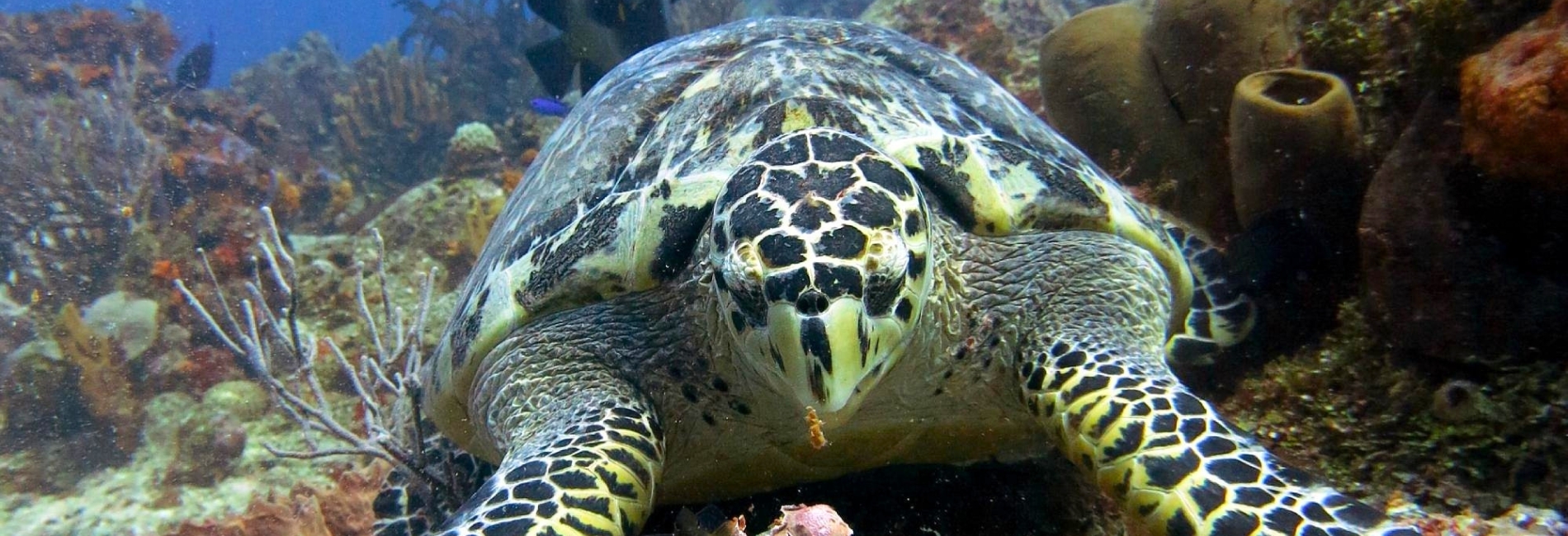
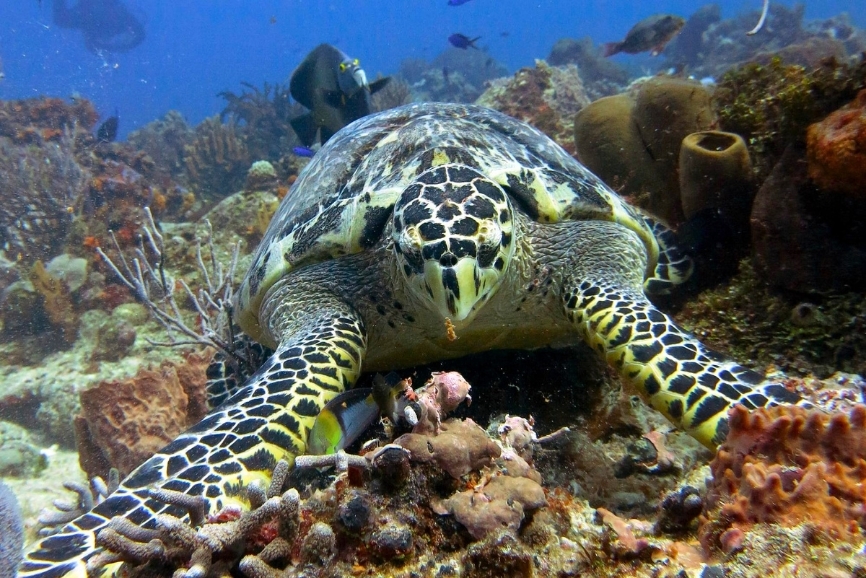
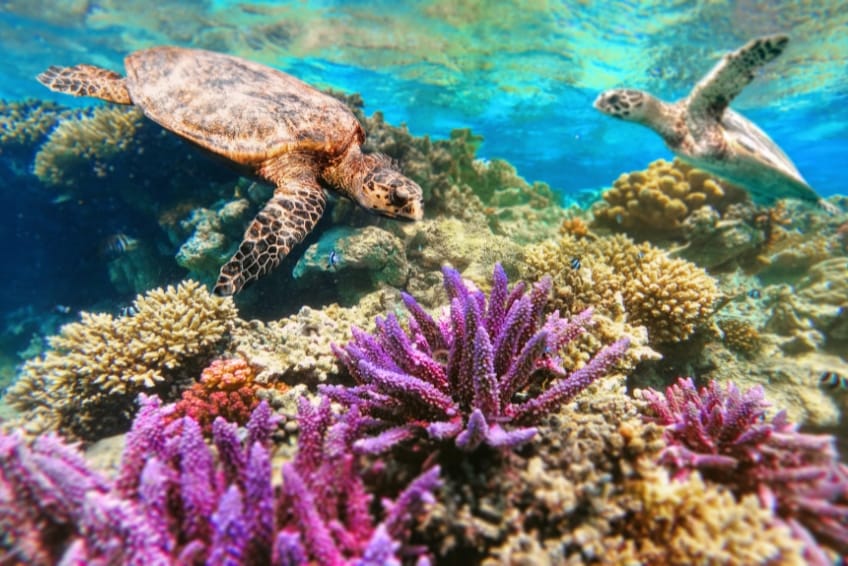
Palancar is not a single dive site. It is a reef system so large that most divers spend multiple trips working through its different sections. The Gardens end is all towering coral pinnacles, archways, and open swim-throughs encrusted with sponges and sea fans, with mild current and visibility that regularly clears 100 feet. It is where we take first-timers who want to understand immediately why Cozumel has a reputation. Turtles are practically resident here, and if you hover quietly at a cleaning station, you’ll often see them holding completely still while small fish tend to their shells.
The Caves and Horseshoe sections sit deeper and involve genuine overhead environments, including coral tunnels and caverns that require solid buoyancy before you enter them. The current can pick up here, and the depth means shorter bottom times, but the formations are unlike anything else on the island. Keep an eye out for the splendid toadfish lurking in crevices along the base of the coral walls. This funky-looking creature looks like it was designed by someone who lost a bet, and it is found almost exclusively in Cozumel.
Palancar is best dived slowly. Drift through the Gardens, stop in the blue when the current loosens, and let the fish come to you. On sunny days, the light beams through the coral formations in a way that makes underwater photographers completely irrational with their shutter fingers.
Insider Tip: Many operators run Palancar twice in a single day, first the Caves at depth, then the Gardens as a shallower second dive. That combination shows you everything the reef has to offer without feeling rushed.
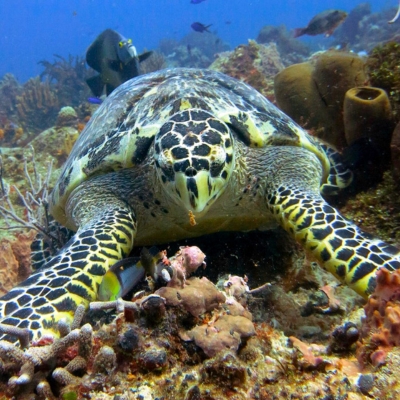
Palancar Reef
Santa Rosa Wall
Depth: 50-90 ft (wall extends far beyond recreational limits) Skill level: Intermediate to advanced.
Santa Rosa Wall is the dive that makes experienced divers come back to Cozumel. The reef drops vertically away beneath you, disappearing into a deep blue that has no visible bottom, and a steady northward current carries you effortlessly along the edge of it. Giant barrel sponges the size of armchairs grow out of the wall face. Sea fans reach out into the current. Turtles materialize from the blue and glide past at close range, apparently unbothered.
In winter, spotted eagle rays are a regular presence here. Sometimes they’re solo, sometimes in groups of half a dozen, banking through the current with a grace that seems genuinely unfair given that they are shaped like a kite. The wall also attracts large groupers, queen angelfish, and the occasional nurse shark tucked into a ledge at depth.
The current at Santa Rosa runs more reliably and more strongly than at most Cozumel sites, which is exactly the point. You need to be comfortable with drift diving, good at air consumption, and confident about buoyancy before you come here. Confident beginners have dived Santa Rosa with experienced divemasters, but generally the recommendation is to get your Cozumel legs under you on a couple of shallower sites first.
The first time I looked over Santa Rosa’s edge, the reef just fell away into nothing, the wall going straight down with the current pulling me north, and a turtle cruised past at eye level, completely indifferent to my presence. I’ve dived a lot of places and that moment still ranks.
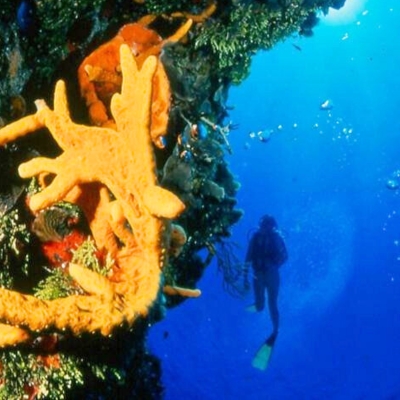
Santa Rosa Wall
Columbia Reef (Deep & Shallows)
Depth: Deep: 70-80 ft. Shallows: 20-40 ft. Skill level: Deep: intermediate. Shallows: beginner.
Columbia covers two completely different dives in one reef system, which is part of why operators love pairing them as a two-tank day.
Columbia Deep offers impressive wall topography with huge coral buttresses, swim-throughs, and the kind of critter density that rewards divers who slow down. Nurse sharks are common, tucked under ledges at depth, usually resting but occasionally gliding past at close range. Green moray eels extend from crevices. Eagle rays pass through in winter. The site has a similar feel to Santa Rosa Wall, but generally with slightly gentler current, which makes it more accessible for divers who are still getting comfortable with drift diving.
Columbia Shallows is a different experience entirely. At 20-40 feet with excellent visibility and warm light, it is a reef that genuinely rewards spending a full tank just hovering and looking closely. Schools of blue tangs move through in formation. Sergeant majors hold territory over small coral heads. Lobsters tuck themselves under ledges. And every now and then, if you have a divemaster who knows what they are looking for, a seahorse will appear wrapped around a sea fan, no bigger than your thumb, perfectly camouflaged and entirely unimpressed by your presence.
I hovered over one for five minutes on a July afternoon dive, watching it maintain its grip on the fan while the current tugged at it. The sunlight at that depth made every coral head glow. There was a school of blue tangs working past, the water was 84 degrees, and I had 1200 psi left. One of the best second dives I have ever done.
Insider Tip: If visibility is exceptional on a calm day, Columbia Shallows is one of the best macro photography sites on the island. Ask your divemaster specifically to look for the seahorses.
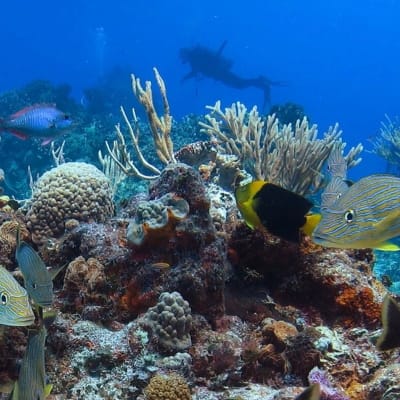
Columbia Reef
Wreck of the C-53 “Felipe Xicotencatl”
Depth: 40-50 ft to superstructure; 80 ft to sand bottom Skill level: Intermediate. Wreck penetration requires Advanced/Wreck certification.
The C-53 is a former US Navy minesweeper turned over to the Mexican Navy and deliberately sunk in 2000 to create an artificial reef near Chankanaab Park. More than two decades on, it is properly colonized, with sponges and coral growth covering much of the hull, schools of grunts hovering in the shadow of the superstructure, spotted moray eels threading through openings in the metal, and nurse sharks regularly found sleeping under the hull.
The wreck sits within recreational depth limits with large access holes cut for safe entry, and it is one of the calmer sites on the island. Its sheltered position has minimal current and visibility that usually holds at 80-100 feet. Circumnavigating the exterior is well within the range of a confident Open Water diver. Penetrating the interior passages, where the light fades and the corridors narrow, requires proper wreck training and a torch, but the reward is swimming through compartments with shafts of light beaming through cutouts in the hull.
The C-53 is frequently used for Advanced Open Water training (wreck dive and deep dive modules), so you will often find instructors here with students. That actually works in your favor on busy days, as the wreck is large enough that multiple groups can dive it simultaneously without feeling crowded.
Insider Tip: Bring a torch, even if you are not entering the interior. The nooks and crevices along the hull are where toadfish hide, where octopus have taken up residence, and where the most interesting critter behavior tends to happen.
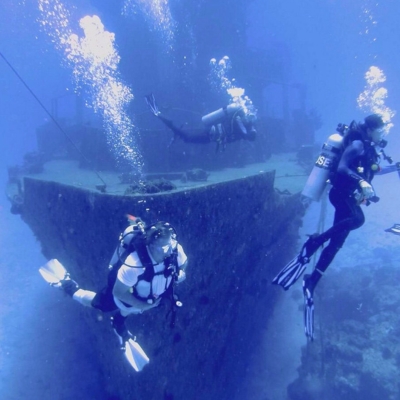
Wreck of the C-53
Punta Sur & Devil’s Throat
Depth: 60-130 ft Skill level: Advanced divers only.
This is the most demanding dive on the island, and the one operators will not let you do without checking your logbook first. The Devil’s Throat is a coral cave that descends through an overhead environment and exits onto the open wall at around 130 feet. It requires excellent buoyancy, solid air management, real comfort with overhead environments, and a guide who knows the route well. Most operators require an Advanced certification and a meaningful number of logged dives before they will take you here.
None of which is meant to be discouraging. It is meant to set expectations so that when you are qualified to do this dive, you appreciate what you are getting into. The tunnel itself is disorienting and exhilarating in equal measure. The exit onto the deep wall, with the open blue below and the reef structure above, is one of those diving moments that gets stored in permanent memory.
Punta Sur is also affected by its location at the southern tip of the island, which leaves it exposed to weather and current variability in ways the central and northern reefs are not. Operators check conditions carefully before running trips here, and it is not uncommon for the dive to be canceled if the site is not behaving. If you get the call that it is on, do not miss it.
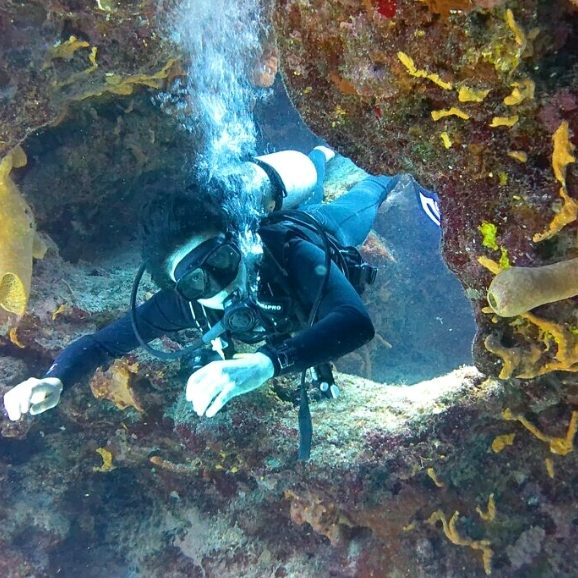
Devil’s Throat
Paso del Cedral
Depth: 50-70 ft Skill level: Intermediate.
Cedral is where Cozumel earns its reputation for nurse sharks. They are here reliably, tucked under coral ledges and overhangs, sleeping in groups or gliding lazily in the current. On a good day, you might find three or four in a single dive, ranging from three feet to easily six. They are not aggressive (nurse sharks almost never are), but they are large animals, and the instinct to hold still when one drifts past at close range is entirely reasonable.
Beyond the sharks, Cedral rewards divers who slow down and look into the reef structure. The swim-throughs are photogenic and gentle. Green moray eels are common in the crevices. Big grunts and snappers school along the reef edge. The current is typically moderate, enough to drift comfortably but not so strong that it demands full concentration.
During a December dive here, our divemaster froze mid-water and pointed at a ledge at around 65 feet. Underneath it was a nurse shark, easily six feet long, resting on the sand. We hung in the current and watched for three minutes. Then it pushed slowly off the bottom, glided directly through our group without breaking stride, and dissolved into the blue. The five of us looked at each other with the kind of expression that does not require words.
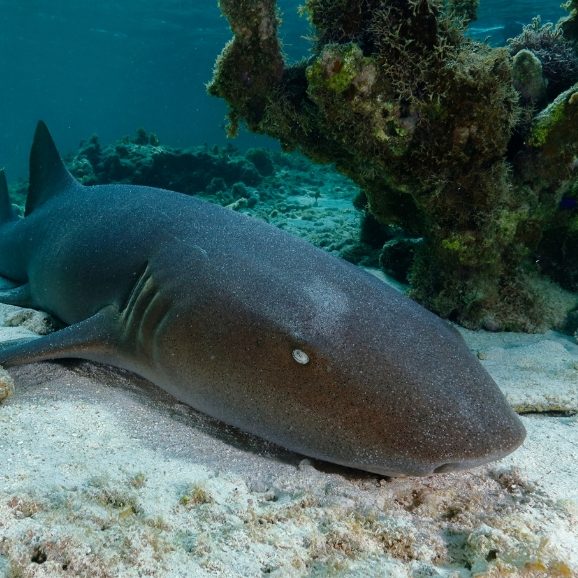
Nurse Shark
Tormentos
Depth: 40-55 ft Skill level: Intermediate.
Tormentos runs fast. The current here moves more quickly than at most central reef sites, which means you cover ground efficiently and the marine life is oriented into the current in a way that makes for dramatic sightings. The reef profile is relatively low, but the density of marine life more than compensates. Spotted moray eels are practically everywhere, lobsters peek out from under every significant ledge, and schooling grunts and snapper move in tight formations.
It is a great choice for a second dive when you want something different from a wall. The speed of the drift gives it an energy that slower sites do not have, and the shallow depth extends your bottom time. Not the place for macro photography unless you have exceptional buoyancy control, but excellent for divers who want to feel the current work. One of our personal favorites.
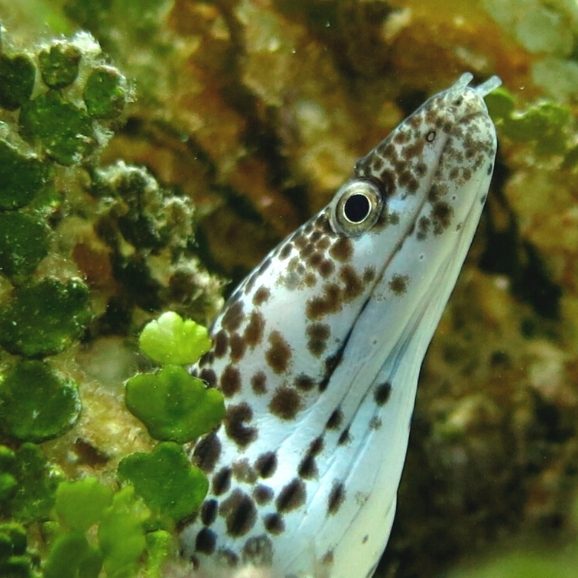
Tormentos
Yucab
Depth: 40-55 ft Skill level: Intermediate.
Yucab is often paired with Tormentos as a two-tank day, and the two sites show you different sides of what these reefs can do. Where Tormentos runs fast with a lower reef, Yucab moves at a gentler pace and rewards close inspection of the reef structure. Fish density is high with schooling blue chromis, queen angelfish, rock beauties, and the occasional spotted drum if you look carefully in the darker sections under coral heads.
It is a solid middle-ground dive. Not as dramatic as the walls, not as technically demanding as the advanced sites, but reliably beautiful and well-suited to divers who want quality marine life encounters without strong current or significant depth.
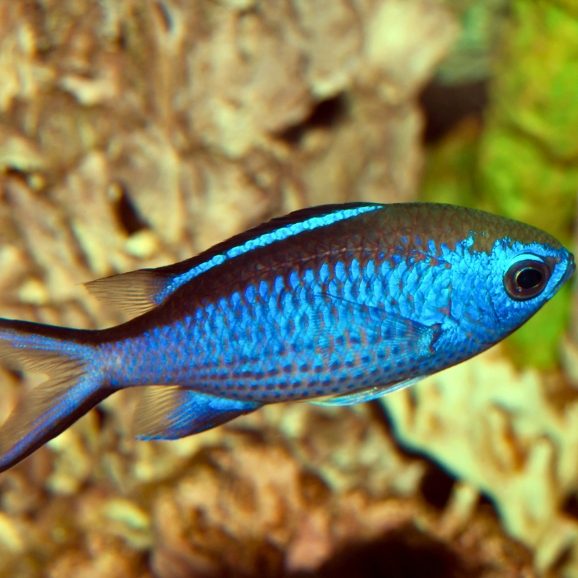
Blue Chromis at Yucab
Paradise Reef and Night Diving
Depth: 20-50 ft Skill level: Beginner by day; beginner-friendly night dive.
Paradise Reef sits close to the cruise ship piers, which makes it one of the more frequently dived shallow sites on the island during the day, but that isn’t the real reason to come here. Come here for the night diving. Cozumel night diving is some of the best in the Caribbean, and Paradise is where it is most accessible.
After dark, Paradise transforms. Octopuses emerge from hiding and hunt openly across the reef. Spanish lobsters pick their way across the sand. Green moray eels extend much further from their holes than they do in daylight. And somewhere on almost every night dive, a divemaster’s torch beam will find a splendid toadfish sitting in an opening in the coral, staring out with its characteristic expression of deep existential disappointment. It is one of the most charismatic ugly animals in the ocean, and it is found almost exclusively in Cozumel.
For first-time night divers, Paradise is a good introduction. The depth is forgiving, the current is typically gentle, and the site is familiar enough to operators that your divemaster will know exactly where to look for the interesting stuff. The briefing will cover light signals and buddy communication, and then you will descend into a reef that looks completely different from the one you dove at noon.
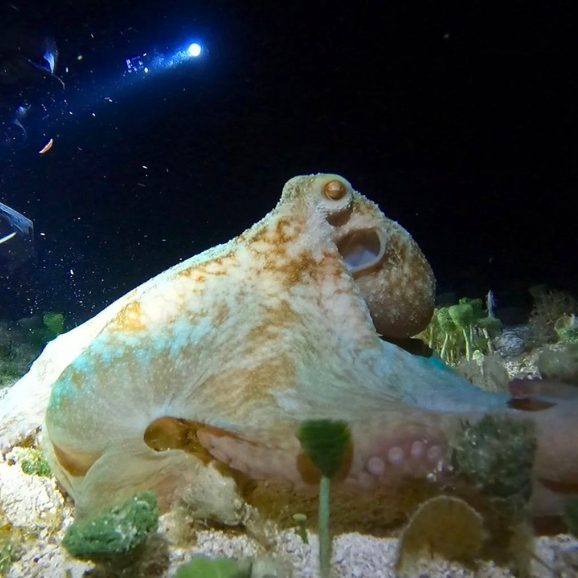
Octopus On A Night Dive
San Francisco Reef
Depth: 40-60 ft Skill level: All levels.
San Francisco reef is one of Cozumel’s most accessible reefs and a consistent crowd pleaser year-round, but in winter, it becomes something special. From December through February, spotted eagle rays congregate here in numbers that the other sites rarely match. Sometimes a dozen or more, moving in loose formation through the current above the reef, their wing spans reaching five or six feet, banking and turning in a synchronized way that looks choreographed.
Outside of eagle ray season, San Francisco is a pleasantly varied reef with good coral coverage, reliable turtle sightings, and the kind of fish density that makes underwater photographers happy. The current is typically gentle to moderate, visibility is consistently good, and the depth suits divers of all levels. It is a reliable first or second dive of the day.
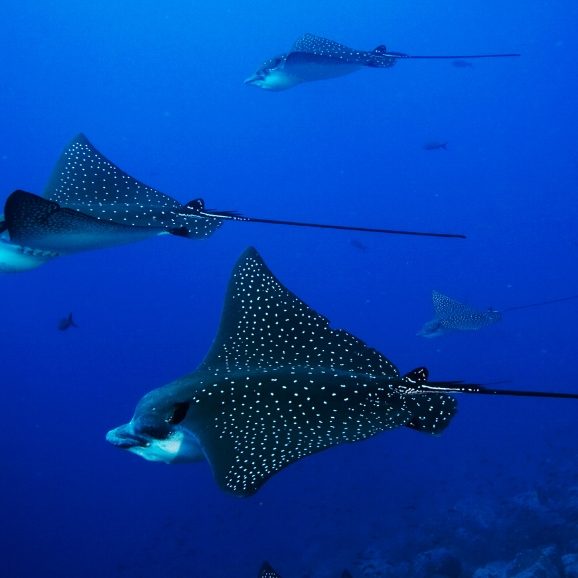
Spotted Eagle Rays
Barracuda Reef (North)
Depth: 40-60 ft Skill level: Advanced. Strong current, exposed location.
The north end of the island is a different world from the sheltered southwest reefs where most diving happens. The current is stronger, less predictable, and occasionally formidable. Operators are selective about when they run trips here, and it is not a site you access on a whim.
When conditions cooperate, Barracuda Reef delivers the kind of pelagic encounters that are genuinely rare anywhere in the Caribbean. Large schools of barracuda and jacks hold in the current. Reef sharks are more commonly sighted here than anywhere else on the island. In winter, bull sharks have been reported, though they are not reliably present in the way they are at Playa del Carmen’s famous bull shark dive. It is a site that rewards experienced divers who have already done the marquee sites and want something with more edge.
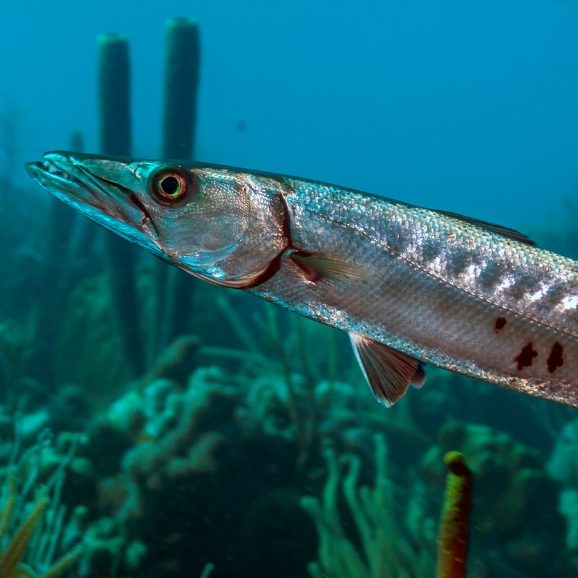
Barracuda Reef
Shore Diving: Villa Blanca, Blue Angel and Tikila
Depth: 20-40 ft Skill level: Beginner to intermediate.
Most diving in Cozumel happens from boats, but shore diving in Cozumel is a genuinely underrated option with a handful of accessible entry points worth knowing about, particularly for early morning dives before the boat operators start running, or for divers who want to add a third dive without paying for another full boat trip.
Villa Blanca offers easy water entry and a healthy shallow reef that starts almost immediately. Blue Angel, at the hotel of the same name, has a structured shore entry and a house reef with consistent turtle sightings. Tikila sits a bit further south and is less trafficked, which usually translates to calmer marine life behavior.
Shore diving in Cozumel requires awareness of the current, which can run north to south along the coast. Always dive into the current first and let it bring you back to your exit point, and make sure you have a surface marker buoy with you when you ascend.
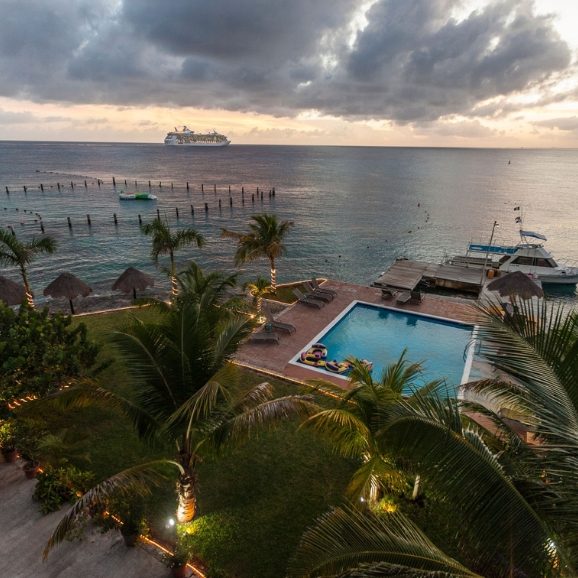
Blue Angel Hotel


What's the Best Time to Dive in Cozumel?
The short answer is that Cozumel is a year-round destination with no genuinely bad season for diving. The longer answer is that different months deliver meaningfully different experiences, and knowing what to expect will help you match your trip to what you most want to see.
Seasons Quick Reference
| Month | Water Temp | Visibility | What to Look For |
|---|---|---|---|
| January-February | 75-78°F | 100+ ft | Spotted eagle rays, big groupers, excellent clarity |
| March-May | 78-82°F | 80-100 ft | Calm seas, excellent conditions |
| June-August | 82-86°F | 70-90 ft | Whale sharks (late May-August), spawning aggregations, nesting turtles |
| September-October | 84-86°F | 60-80 ft | Hurricane season, fewer boats, occasional reduced viz |
| November-December | 79-83°F | 90-100+ ft | Eagle rays returning, consistently excellent conditions |
Winter: December through February
Winter water temperatures drop to around 75-79°F, which sounds cold in comparison to summer but is still comfortable in a 3mm wetsuit. The bigger story is what is happening in the water. Spotted eagle ray season. From December through February, they school around the island’s southwest reefs in formations that can reach a dozen or more animals at once. Santa Rosa Wall and San Francisco Reef are the most reliable spots (see above), though sightings happen across multiple sites during peak weeks.
Visibility in winter is typically the year’s best. 100 feet is common, and on exceptional days, you can see further than that. The reef edges are defined with a sharpness that makes everything look like a screensaver.
The tradeoff is weather. Cold fronts from the north (called Nortes locally) occasionally roll through between December and February, closing the port for a day or two at a time when winds make the crossing to the reef rough. These are short-lived and impossible to predict more than a day ahead, but worth knowing about if your trip is short. If a Norte hits on your dive day, your operator will reschedule or offer a credit.
Spring: March through May
Spring is widely considered Cozumel’s best overall diving season, and it is hard to argue. Water temperatures climb back through the 78-82°F range, the sea calms down, and visibility stays excellent. The eagle rays are still around through March, and by late May, the whale sharks begin aggregating off Isla Mujeres (not Cozumel proper, but a doable day trip), with peak season running through August.
Spring also sees an uptick in turtle activity as nesting season begins, and the reef feels generally more alive than it does in the slower winter months. It is peak tourist season, which means boats are busier, but the underwater experience is worth it.
Summer: June through August
The water in summer is as warm as it gets: 82-86°F, comfortable in a shorty or even a rashguard for those who run warm. Sea conditions are typically calm, and while visibility can dip slightly compared to winter and spring (70-90 feet rather than 100+), it is still excellent by global standards.
Summer brings spawning aggregations to some reef sites, which concentrates predator activity in interesting ways. Turtle nesting is active on the beaches through August. Crowd levels drop after Memorial Day and stay lower through the summer, meaning smaller groups on the boats and a more relaxed experience.
The theoretical risk factor is the beginning of hurricane season, which runs from June through November. In practice, serious storms affecting Cozumel directly are infrequent, and most operators monitor forecasts carefully. A week of diving in July or August is more likely to deliver flat, clear water than anything dramatic.
Fall: September through October
September and October are the quietest months on the island. Hurricane season is technically at its peak, and enough travelers stay away that crowds thin considerably. Operators still run trips on most days, but with smaller groups. Water temperatures hit their annual high, and visibility is variable. Sometimes excellent, occasionally reduced by rain or surge from distant storm systems.
For flexible travelers who are comfortable with some weather uncertainty, the fall off-season offers real value. Prices drop, boats are less crowded, and the diving is still quality when conditions cooperate.
Cozumel Diving for Beginners and First-Timers
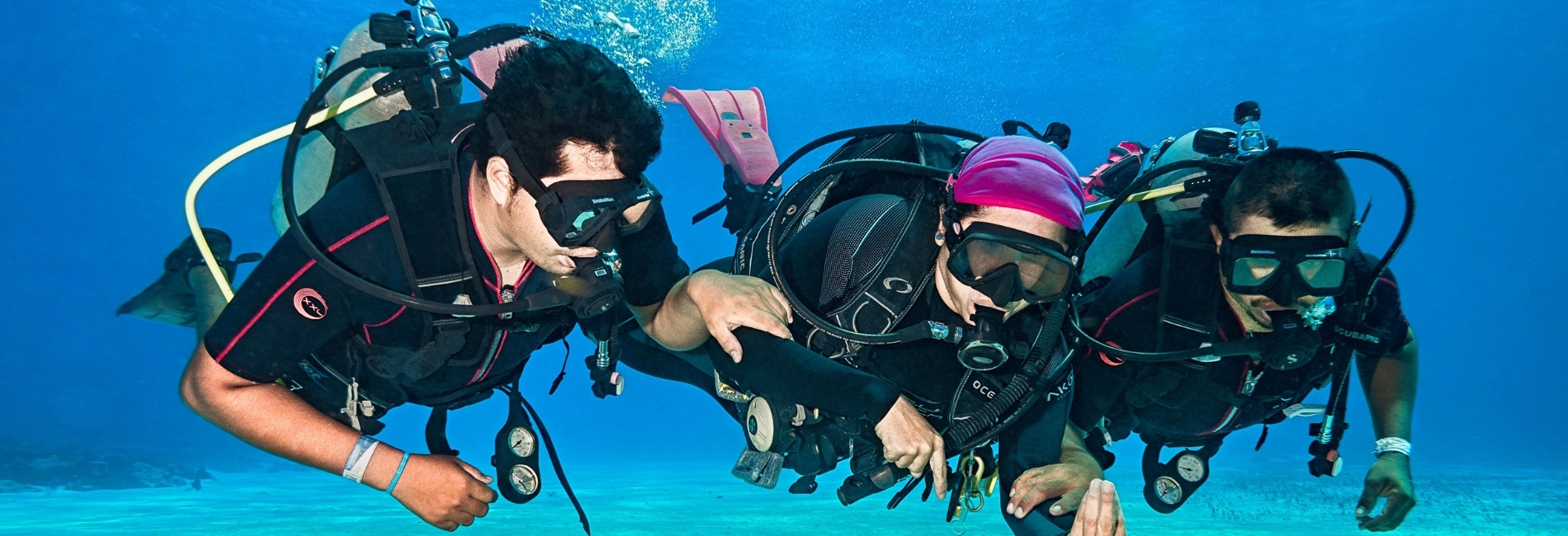
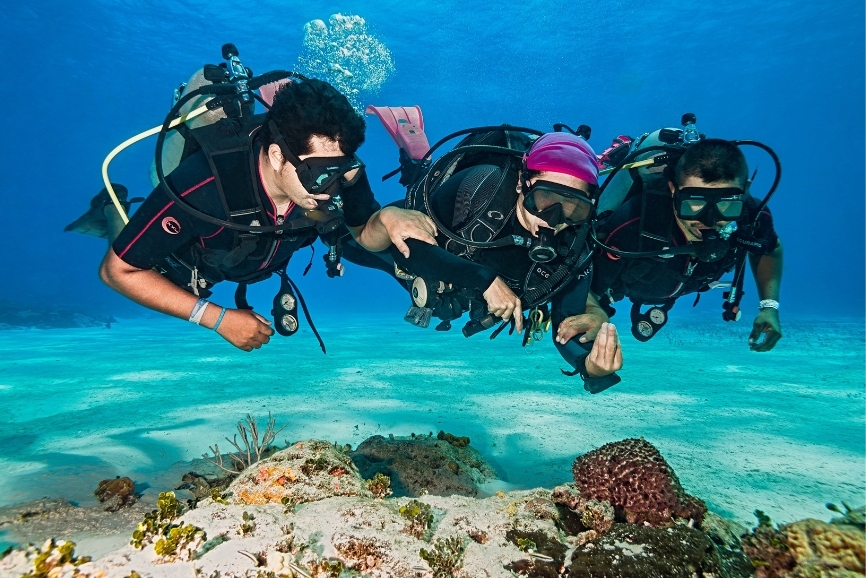
Cozumel is genuinely one of the best places in the world to take up diving, and we’re not just saying that cause we live here. It is a function of warm, clear, calm water and an established ecosystem of patient, experienced operators who deal with beginners every day. If you have never dived before, or only have a handful of dives in murky lakes or less-than-ideal conditions, your first dive in Cozumel will recalibrate your expectations for what diving can be.
Do you need to be certified? No, for your first experience. Every operator on our list runs Discover Scuba Diving, a supervised introductory program that requires no prior certification. You will spend an hour or so in shallow water getting comfortable with the equipment and basic skills, then accompany a divemaster to a shallow reef at around 40 feet. It is not a certification (you cannot dive independently after completing it), but it is a fully real dive in the actual ocean with actual marine life. Cost is typically $100-150 USD.
If you want to get certified in Cozumel, the PADI Open Water course runs 3-4 days and costs around $350-500 USD, depending on the operator. Cozumel is one of the better places in the world to do this. The conditions are forgiving, the water is clear enough that learning to equalize and manage buoyancy feels manageable rather than overwhelming, and the instructors are accustomed to teaching in a second or third language, which keeps communication clear.
Best sites for beginners: Palancar Gardens, Columbia Shallows, Paradise Reef, and San Francisco Reef. All four are shallow enough for long bottom times, have gentle current, and offer marine life density that makes the learning process feel rewarding rather than purely technical.
What to tell your operator: Be honest about your experience level. If you’ve never dived before, no problem. If you have 10 dives, say so. If you are still working on buoyancy, say that too. Every operator on our recommended list is equipped to adjust the dive plan based on your ability, and they would rather know upfront than manage a problem at 60 feet.
Can You Dive in Cozumel from a Cruise Ship?
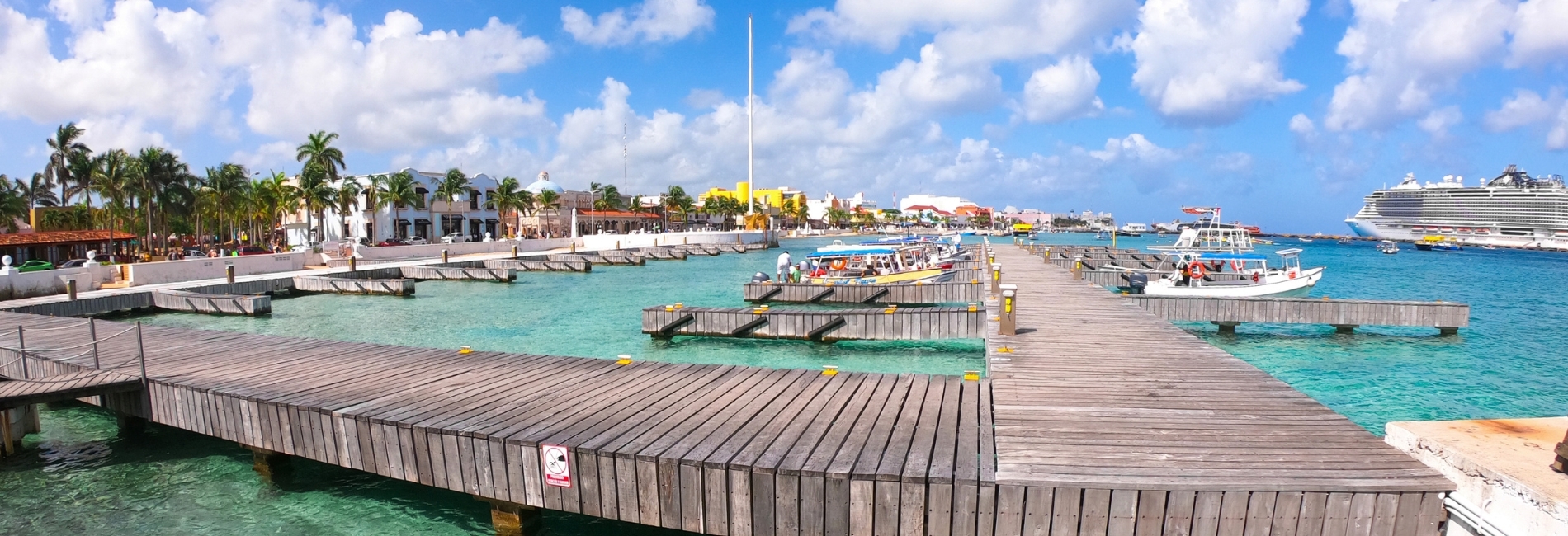
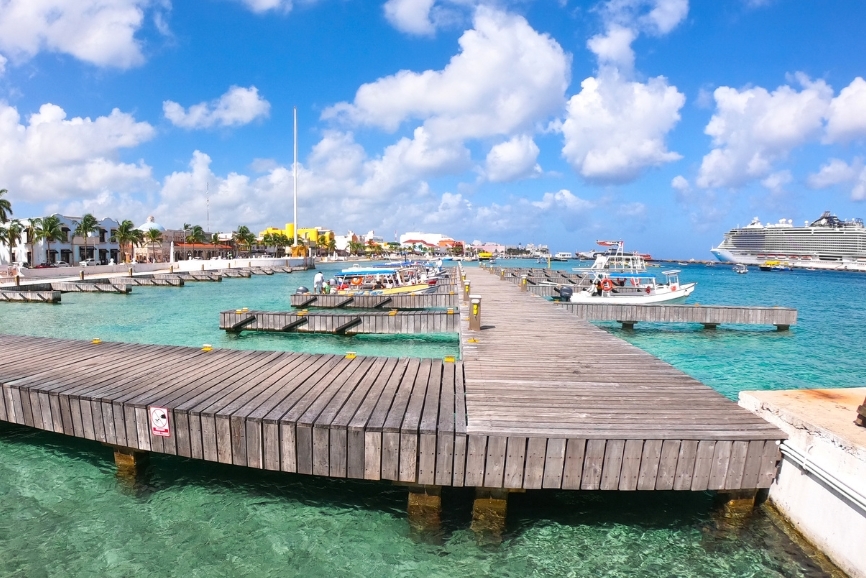
Yes, and it is one of the more underrated ways to spend a port day. The practical question is time management, and the answer is more workable than most cruise passengers assume.
A typical Cozumel port call runs 7-9 hours, with ships usually docked by 8am and departure around 5pm. You need to be back at the pier around 30 minutes before departure. That leaves a usable window of around 6-7 hours, which is enough for a standard two-tank dive morning with time to clean up and make it back without running.
Ship excursion vs. independent operator. The cruise line’s own dive excursions are more expensive, use larger groups, and operate on the ship’s schedule rather than the reef’s. Independent operators like the ones we recommend in this guide typically offer smaller groups (many cap at 4-6 divers), more experienced guides, and considerably better prices. The tradeoff is that if you are somehow late back to the pier, the ship does not wait, and the independent operator can’t guarantee your return time the way a ship excursion technically does. The practical solution is simple. Book an early first dive (boats typically leave the dock by 8am), do two tanks, and plan to be back at the pier by 1-2pm with time to spare.
What to book in advance. High season (November through April) fills up quickly. If your ship is calling on a weekend or a popular port day, email your operator 2-3 weeks ahead. Most operators will hold a spot with a deposit.
What to expect. You will be asked to show your certification card. If you are not certified, Discover Scuba is available but takes longer, so factor that into your time calculation. Bring cash for the marine park fee (around $12 USD), your C-card, and a towel. The operator will handle tanks, weights, and the dive briefing. Most boats offer equipment rental if you do not have your own.


Recommended Cozumel Dive Shops
One of the most common questions we get is “Which dive shop should I go with in Cozumel?” The truth is, Cozumel has many excellent operators as competition has driven up quality. We have dived with all of the shops below over multiple seasons and recommend them without reservation. All of these shops have great reputations, bilingual staff, and are very friendly to both novice and seasoned divers.


When two friends passionate about the ocean teamed up to open a dive shop, Cozumel H2O was born. Loes and Miguel of Cozumel H2O have dedicated their lives to showing others the beauty that lies below the surface. The Cozumel H2O dive instructors have an incredible talent of spotting marine life, making your dive experience that much more thrilling. Of course, your safety and comfort are always a priority for the team in and out of the water which is why they only take small groups. Chances are, you may even learn a thing or two, and emerge a better, more knowledgeable diver.
If you want to learn more, Cozumel H2O offers all scuba courses, from a discover scuba outing to open water to dive master. If you have a group of divers and snorkelers, Cozumel H2O can accommodate everyone on the same boat. Ensuring your whole group has a chance to enjoy the day together. Whether you opt for a single day outing, or a multi-day dive package with Cozumel H2O, every dive will be enchanting and unforgettable.


Ray Diving is one of the top-rated outfitters for a reason… Ray! Ray has been diving in Cozumel for 20+ years and knows these reefs as well as anyone. Ray Diving Cozumel has been and always will be 100% personalized. Specializing in small groups of no more than 4, Ray strives to make each dive fit your wants and needs. He makes your trip even more intimate by avoiding heavily populated sites as much as possible.
Ray’s incredible experience and attention to detail create a rewarding and safe dive trip for you and your family or friends every time. Living and working by his personal philosophy that “personalized service is the best experience” Ray Diving Cozumel will provide you with the exclusive dive trip you never knew you always wanted.


“Nothing makes us happier than sharing underwater moments with our guests!” This is the mantra of the incredible Cozudive team. When you love what you do, it shows. Cozudive strives to make each dazzling dive experience a chance for their guests to have fun, but also to become a more improved, confident diver. By only having small groups, they can make sure everyone gets the attention they deserve. So, whether you are just starting your dive journey or consider yourself an old pro, you can feel comfortable with Cozudive’s experienced team. Did we mention they also speak English, Spanish and French!
Setting themselves apart even more, Cozudive provides a delicious, fresh lunch on board so you can refuel and be ready to get back into the glorious blue. When choosing Cozudive you will arrive a customer and leave as family.
Island Life Mexico Tip: Always communicate your skill level and any special requests with your dive operator. All our recommended dive shops are very accommodating, whether you want a shallow, easy reef or a fast drift through advanced sites, they’ll make it happen.


Cozumel Dive Training and Certification
Cozumel consistently ranks among the top places in the world to get a PADI certification, and the reasoning is simple. The conditions are as close to ideal of a learning environment as it gets. Warm, clear water with gentle current means beginners can focus on the actual skills rather than managing discomfort. A mistake in your buoyancy at 30 feet in 100-foot visibility is a manageable learning moment. The same mistake in cold, murky water is more stressful for everyone involved.
Open Water is the beginning certification course and all three of our recommended shops offer the full PADI certification pathway. The standard Open Water course runs 3-4 days and covers the classroom knowledge (now completed online before your trip through PADI eLearning), pool or confined water skills, and four open-water dives on the reefs. Cost runs $350-500 USD depending on the operator and whether equipment rental is included.
From Open Water, the typical progression for divers who want to access more of Cozumel’s demanding sites are as follows.
Advanced Open Water (2-3 days, $250-400 USD) adds five adventure dives including a deep dive to 100 feet and a navigation dive, plus three of your choice (drift, night, wreck, and peak performance buoyancy are all available and all locally relevant). This certification unlocks sites like Santa Rosa Wall at full depth and supervised wreck entrance at the C-53.
Enriched Air Nitrox is worth doing if you plan to dive multiple days. Nitrox extends no-decompression limits at depth, which matters on repetitive diving days. The specialty course takes half a day and costs around $150-200 USD. Many Cozumel operators offer free Nitrox fills to certified divers as a booking incentive.
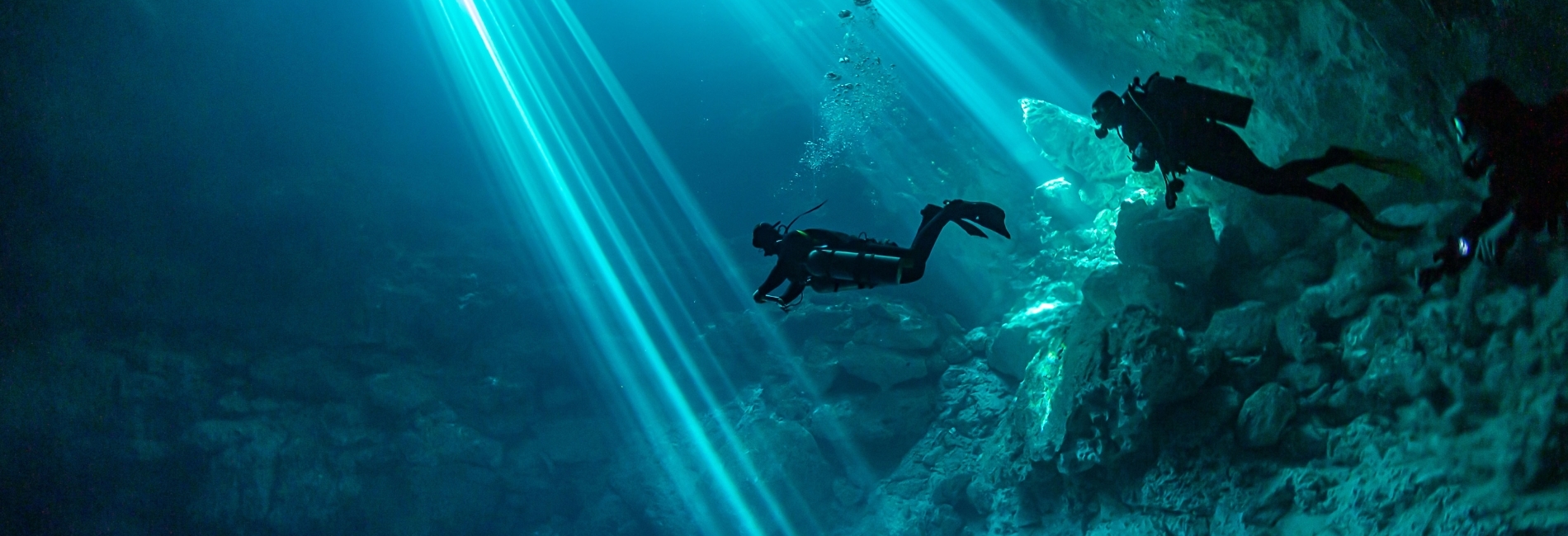
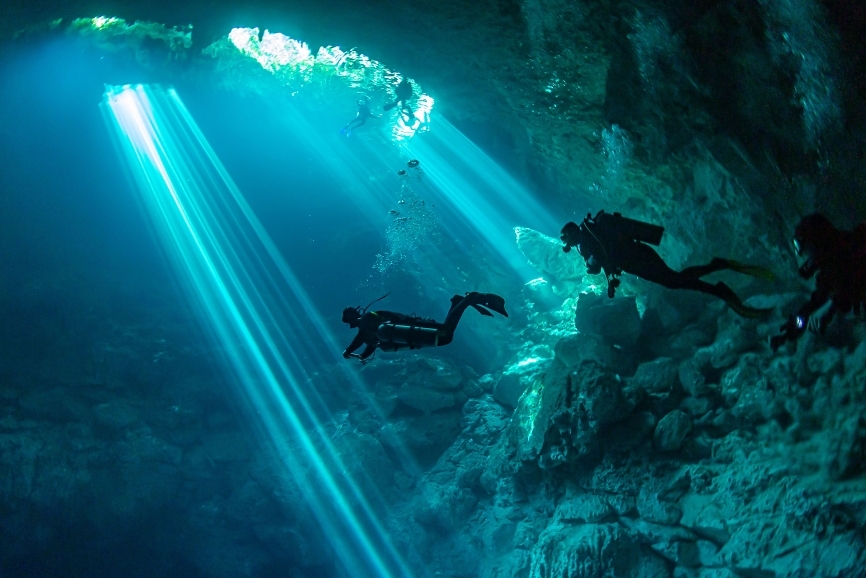
Cenote Diving as a Day Trip from Cozumel
The Yucatan Peninsula sits on top of one of the world’s most extensive underground river systems, and the cenotes (natural sinkholes where the limestone ceiling has collapsed to reveal the aquifer below) offer a style of diving that has no equivalent anywhere else on Earth. Crystal-clear freshwater, remarkable visibility (sometimes 200+ feet), halocline layers where fresh and salt water mix in a visual distortion that looks like oil on water, and an eerie silence that feels nothing like the ocean.
Getting there from Cozumel is straightforward. The passenger ferry from the main pier to Playa del Carmen runs frequently and takes around 45 minutes each way (around $15-20 USD per person). From Playa del Carmen, the main cenote diving sites are 20-45 minutes by taxi or rental car. Guided cenote diving tours are also available that handle all the logistics, which is worth considering for a first visit since navigation in the cave systems requires an experienced guide, and the flooded jungle roads are not always obvious.
Best Cenotes For Divers
Dos Ojos (Two Eyes) is the most accessible and best suited for divers transitioning from open-water experience. Two connected sinkholes with stunning crystal visibility, a mix of open cavern and deeper cave sections, and bat cave formations that are unlike anything else in the region.
The Pit is for more experienced divers. It drops 120 feet through halocline layers, past a hydrogen sulfide cloud that sits at around 90 feet like a white fog bank, into a deeper chamber where ancient fossils are preserved in the anoxic water. It is a disorienting and extraordinary experience.
Car Wash (Aktun Ha) is shallower, warmer, and filled with freshwater turtles and lily pads near the surface, giving it a genuinely different feel from the cave-heavy sites. Good choice for divers who want to see the cenote ecosystem without going deep into cave environments.
Island Life Tip: Divers who try to combine a two-tank reef morning in Cozumel with a cenote afternoon find it exhausting and rushed. We recommend dedicating a full day to the cenotes, either as a standalone day trip or at the beginning or end of your Cozumel trip when you have more logistical flexibility.
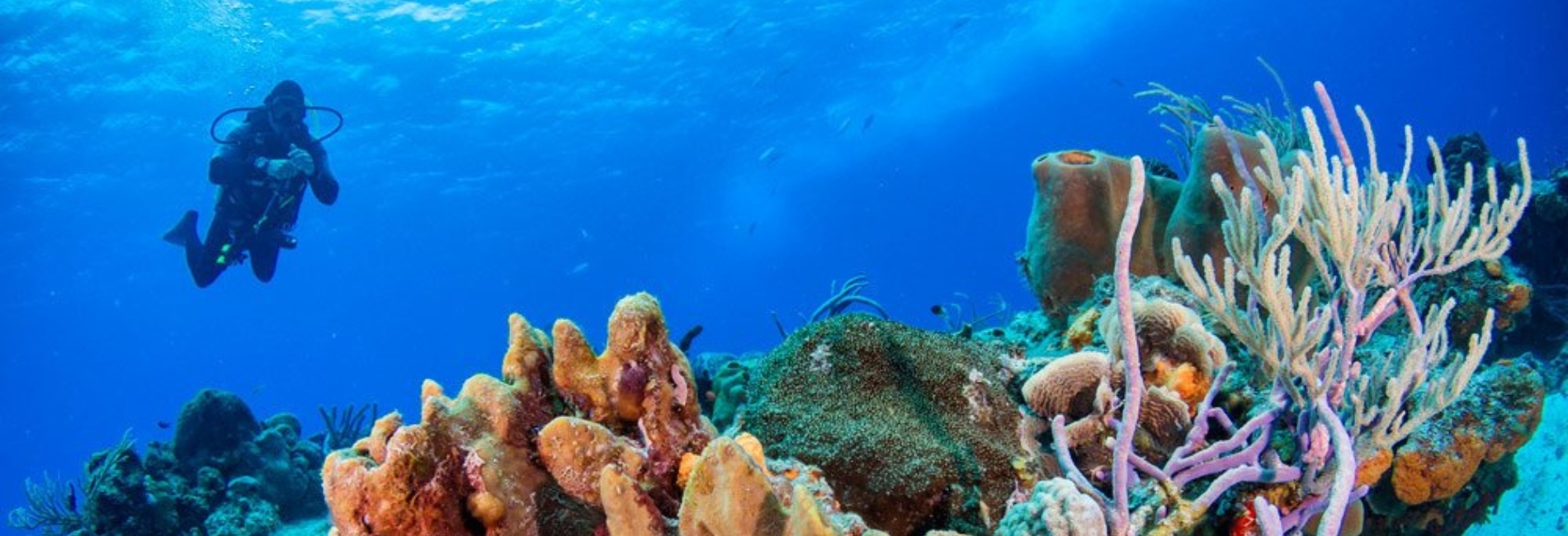
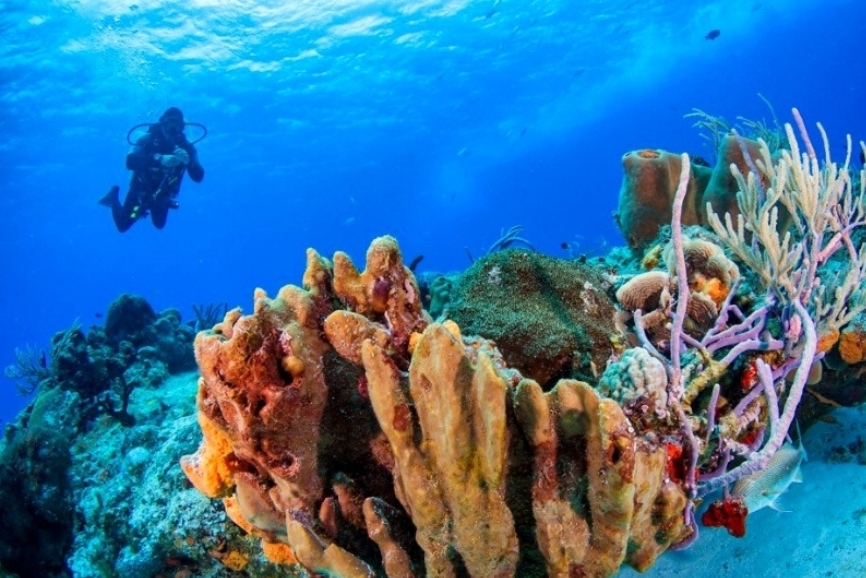
Cozumel Marine Park Rules Every Diver Should Know
The Arrecifes de Cozumel National Park covers over 29,000 acres of marine habitat along the island’s western coast and represents one of the Caribbean’s genuine conservation success stories. The rules exist because they work, and every diver who enters the park has a responsibility to know and follow them.
The Sunscreen Ban
This one surprises people. The official Marine Park regulation bans non-biodegradable sunscreen, and in practice, most operators enforce a complete ban on all sunscreen in the water. The research on sunscreen damage to coral ecosystems, particularly oxybenzone and octinoxate, is clear enough that operators take the conservative position. Wear a rashguard or wetsuit for sun protection on the boat. If you apply sunscreen in the morning before heading out, make sure it has fully absorbed before you enter the water.
The Marine Park Fee
Around $12 USD per diver per dive day in 2026 (217 MXN), collected at the dock before your first dive. This fee funds Marine Park enforcement, mooring buoy maintenance (every dive site has permanent moorings so boats do not anchor on the reef), and conservation programs. It is legitimately one of the better-run marine park fee systems in the Caribbean.
Rotating Site Closures
The Marine Park operates a rotation program that closes individual dive sites for rest periods on a regular schedule. Sites are closed to all diving for weeks or months at a time, then reopened. The schedule changes, and your dive operator will know which sites are currently open. This is worth understanding because occasionally a site you planned to visit will be unavailable (not because of conditions, but because the reef has earned a break).
No-Touch, No-Gloves policy
Touching coral is prohibited throughout the park, and Marine Park regulations prohibit wearing gloves during recreational diving, the logic being that gloves encourage touching. Good buoyancy and awareness of your fins is the actual solution.
No Collecting
No shells, no coral fragments, no marine life (living or dead). The rule is straightforward and enforced.


Cozumel Travel Tips for Divers
Planning your Cozumel dive trip involves a few logistics beyond just diving. Here are essential travel tips, especially for those coming from the United States or Canada. Be sure to download our free Cozumel Dive Planning Checklist here.
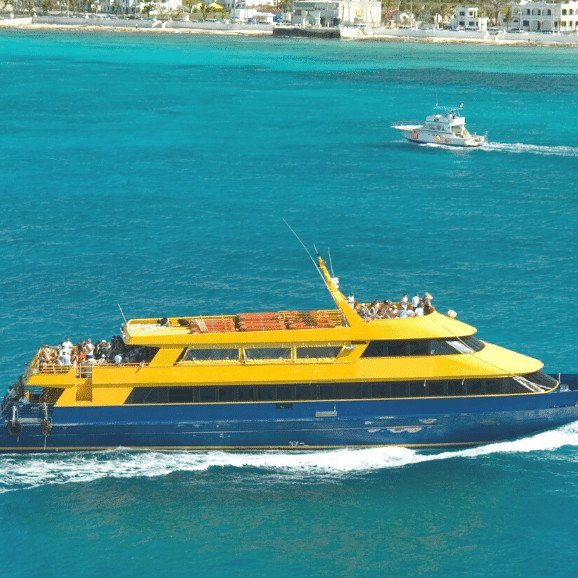
How Do I Get to Cozumel for a Dive Trip?
You have two main options to get to Cozumel. Fly directly into Cozumel’s international airport (CZM) or fly into Cancun (CUN) and then transfer to Cozumel via land and then ferry. There are nonstop flights to Cozumel from several U.S. hubs (Miami, Houston, Dallas, Charlotte, etc.) and often seasonal direct flights from cities in Canada (Toronto, Montreal) during winter. Direct to Cozumel is super convenient and lands you just minutes from downtown.
From the Cancun airport to the Playa del Carmen ferry pier is about 50 minutes by road (you can take an ADO public bus, private shuttle, or taxi). Then the ferry crossing is about 30-45 minutes. Ferries run nearly every half hour from early morning into the evening, operated by Ultramar, Winjet or Xcaret. The ferry is comfortable and diver-friendly. All of this information is in our comprehensive Cozumel Visitors Guide.
Insider Tips: There are three ferry companies alternating departures and there’s no need to buy ferry tickets in advance. Just go to the ferry terminal in Playa Del Carmen and buy a one-way ticket on whichever ferry company is leaving next. If you’re prone to seasickness, take motion sickness meds and sit on the lower deck center. Most days the channel is calm, but it can be choppy if winds pick up.
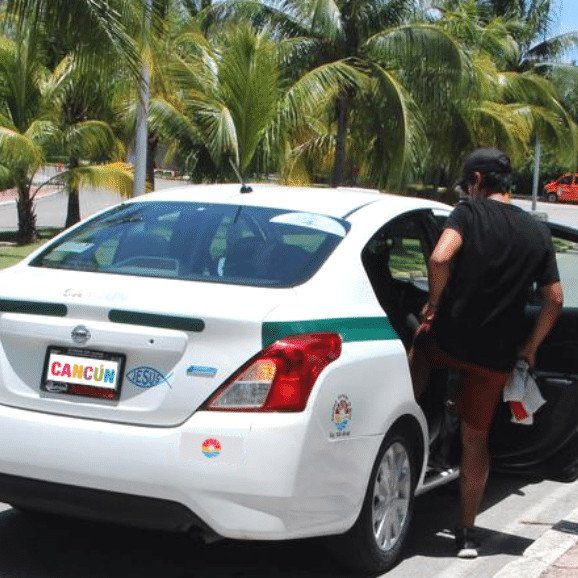
Getting Around on the Island
Cozumel is relatively small. Taxis are plentiful and not too expensive (agree on a rate before you get in; most routes in town are $5-$10, further south to resorts maybe $15-$40). If you stay at a resort out of town, you might end up taking taxis or shuttles to town occasionally. Some people rent cars, and driving is easy, just watch for speed bumps (“topes”). Scooter rental is popular, but not recommended, as there are many scooter accidents involving tourists. Only rent one if you’re experienced and always wear a helmet. For most divers, taxis and hotel shuttles suffice. Bike rentals or walking are options if you stay in town (it’s safe and enjoyable to stroll the waterfront).
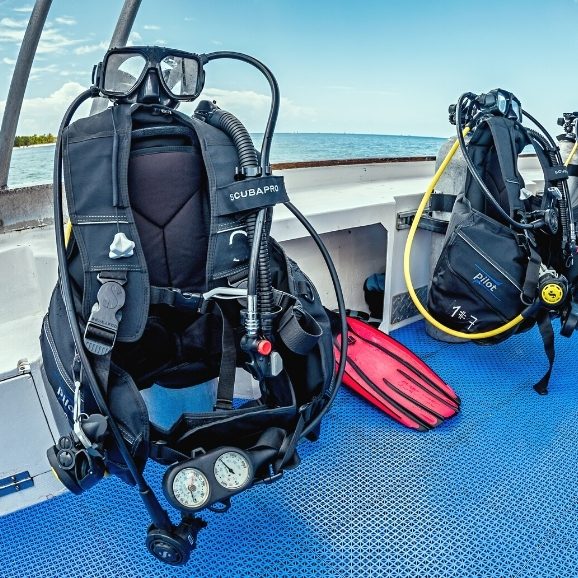
Should I Bring My Dive Gear Or Rent It There?
Cozumel dive shops provide quality rental gear if you prefer to pack light. Typical full gear rental runs $20-25/day. The benefit of renting is less gear to lug through airports. Downside: you might not be as comfortable as with your own well-fitted gear. Our suggestion is to bring your personal essentials (mask, snorkel, fins if you have lightweight ones, and maybe your dive computer for familiarity). Wetsuit choice depends on season, and a packable 3mm full suit is versatile for Cozumel year-round. Regulators and BCDs can be rented from all reputable shops. They’re required to maintain them. If you do bring your own reg and it’s DIN, bring a yoke adapter (Cozumel tanks are yoke valves by default). Don’t forget save-a-dive kit items (spare mask strap, O-rings, defog).
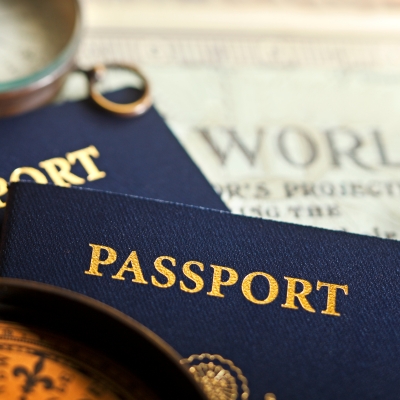
Travel Documents
All visitors need a valid passport that is valid through your travel dates. No visa is required for tourist stays from the U.S. and Canada. You may receive a tourist permit (FMM) on the plane or at immigration. Be sure to keep the little paper slip if they give you one, as you may need to hand it back upon departure. As of 2026, some airports have moved to electronic FMM, but just follow what the officials say. Always carry your passport and dive certification card on your person when traveling.
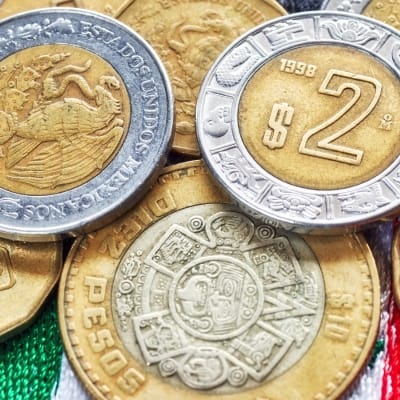
Currency & Money
The local currency is the Mexican Peso (MXN). However, Cozumel businesses widely accept U.S. dollars, especially for dive services, tips, etc. That said, you often get a better deal paying in pesos (the exchange rate shops use might not be the best). It’s a good idea to withdraw some pesos from an ATM on the island for taxis, small eateries, and tips. Credit cards are accepted at many dive shops, resorts, and restaurants, but some smaller businesses are cash only. The marine park charges an access fee each day, but most operators include this in their price. Others may ask you to pay separately in cash.
Tipping your dive crew is customary. Typically, about 10-15% of your dive package or $5-10 per tank per diver is a common range if you were happy with the service. They work hard hauling gear and ensuring you have a great time. Also, tip the boat captain if separate.
Helpful Tips: Notify your bank/credit card that you’re traveling to Mexico to avoid blocks. At ATM’s it is always best to accept the fee but decline the conversion. Your bank at home will give you a better conversion rate. Also, try to bring small bills (USD 10’s or 20’s, or 100/200 peso notes) for tipping boat crew, etc., since making change on boats is hard.
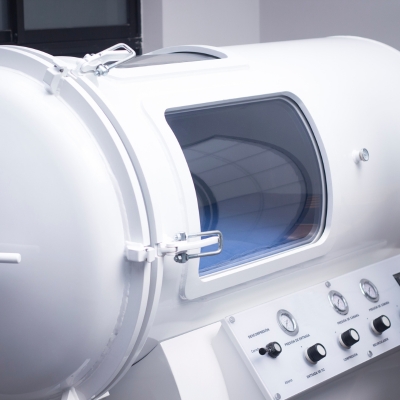
Health & Safety
It’s typically wise to have dive insurance (e.g. DAN – Divers Alert Network) that covers any dive-related medical care or evacuations. Cozumel does have several hyperbaric chambers and decent medical facilities for a small island, but insurance saves you from hefty bills in the unlikely event you need it. Drink bottled water (most resorts provide it and restaurants use purified water/ice). Use reef-safe sunscreen to protect the ocean. And of course, practice good dive safety. Stay hydrated, don’t push your no-deco limits, do a refresher dive if it’s been a while since your last dive, etc. Cozumel’s emergency services are reliable, and the dive community is tight-knit and safety-conscious.

Language
While Spanish is the local language, you’ll find that in Cozumel’s dive industry, English is widely spoken (many dive masters and instructors are expats or bilingual locals). Still, learning a few basic Spanish phrases is appreciated. The island culture is friendly, laid-back, and very welcoming to divers. You’ll often hear “¡Buen buceo!” (good diving) or “¿Cómo estuvo la inmersión?” (how was the dive?) from locals after your trip. Embrace it. Cozumel lives and breathes diving.
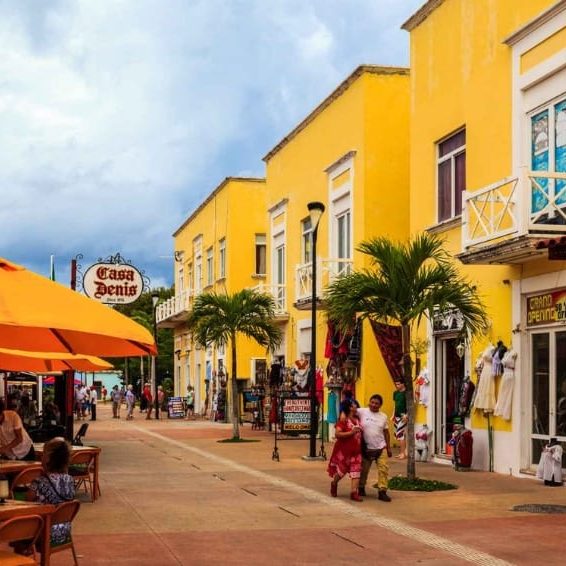
Non-Dive Days
Cozumel has enough going on above water to fill a rest day comfortably. For the full picture of what to do on the island, our Cozumel Visitors Guide covers everything from food to beach clubs to day trips. The Cozumel Restaurant Guide is worth reading before you arrive. There are some genuinely excellent places to eat here that have nothing to do with the tourist strip. If anyone in your group prefers to stay on the surface, our Cozumel Snorkeling Guide covers the best spots. On rest days, our guide to Cozumel’s best beaches will point you to the quieter spots away from the cruise crowds.
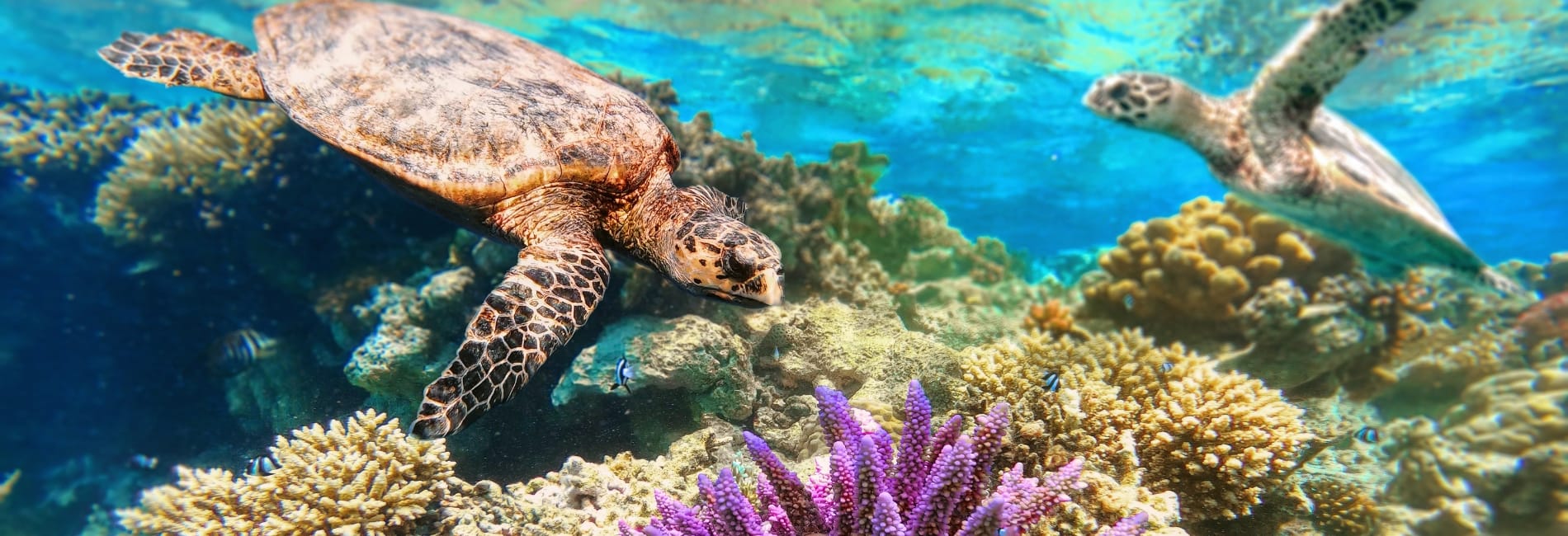
Best Cozumel Dive Resorts
Due to the popularity of diving in Cozumel, there are many dive resorts to choose from. Many of the higher end resorts have in-house dive companies who can’t wait to help you plan the best dive vacation of your life. Most offer 3-7 day dive packages with two to three dives per day. Be sure to check out our Cozumel Hotel Guide and our Best Cozumel All Inclusive Resorts Guide.
This affordable boutique hotel is just south of town and has an onsite dive shop.
Casa Del Mar Cozumel Hotel and Dive Resort
Affordable mini resort option south of town with an onsite dive shop.
Coral Princess Golf & Dive Resort
Just north of town, this midrange hotel has an onsite dive shop. The golf course is now closed.
Intercontinental Presidente Cozumel Resort & Spa
This 5 star luxury resort just south of town offers an onsite dive shop.
This 5-star all-inclusive resort has a dive shop within short walking distance.
This family friendly affordable all inclusive resort has an onsite dive shop.
This 5-star adults only all inclusive resort has an onsite dive shop.


Frequently Asked Questions
How much does scuba diving cost in Cozumel?
A standard two-tank boat dive with a reputable operator costs $80-135 USD in 2026, not including the marine park fee of around $12 USD per diver per day. Equipment rental adds $20-25 USD if needed. Multi-day packages offer better rates than booking day by day, so if you are planning three or more days of diving, ask about package pricing before you commit.
Do you need to be certified to dive in Cozumel?
You need an Open Water certification (or equivalent) to join standard reef dives. However, every reputable operator offers Discover Scuba Diving, an introductory program that lets non-certified divers experience a real reef dive under the supervision of a divemaster. Discover Scuba costs around $100-150 USD and does not result in a certification, but it is a fully legitimate way to experience the underwater world if you are not ready to commit to a full course.
Is Cozumel good for beginner divers?
It is one of the best places in the world for beginners. Warm, clear water, gentle drift currents, and experienced operators who handle first-timers every day create a learning environment that is as forgiving as ocean diving gets. Sites like Palancar Gardens, Columbia Shallows, and Paradise Reef are specifically well-suited to new divers, with shallow depths, good visibility, and marine life density that makes the experience rewarding from the first dive.
What is drift diving and why is Cozumel famous for it?
Drift diving is diving in which a current carries you along the reef rather than swimming under your own power. Cozumel sits in the path of a consistently flowing Caribbean current that runs along its western coast, producing drift conditions that are strong enough to be effortless but usually not so strong as to be unmanageable. You drop in at one point, drift past coral walls and marine life, and the boat picks you up at the other end. It is the defining characteristic of Cozumel diving, and a big part of the reason Jacques Cousteau declared it one of the world’s finest dive destinations. The current also constantly flushes the water through the reef, which is why visibility stays so high.
What is the splendid toadfish and where can I see it?
The splendid toadfish is a small, bottom-dwelling fish found almost exclusively in Cozumel, with only rare sightings documented at a handful of other western Caribbean sites. It is not conventionally beautiful, sitting in holes in the reef with an expression of practiced indifference, but it is one of Cozumel’s most sought-after sightings precisely because of its endemic status. Paradise Reef at night is the most reliable location, but they are present across many of the shallower reef sites. Ask your divemaster specifically. They know where to look.
Can you dive in Cozumel from a cruise ship?
Yes. A typical port day gives you a 6-7 hour usable window, which is enough for a two-tank dive morning with time to return comfortably before departure. Independent operators offer better value and smaller groups than cruise line excursions. Book in advance during high season, aim to be back at the pier by 1-2pm, and have your C-card ready. The diving itself is identical to what any other visitor gets. The reef does not know what brought you to the island.
Are there liveaboard dive boats in Cozumel?
No. The Arrecifes de Cozumel National Park prohibits vessels over a certain size from operating overnight within the park’s boundaries, which effectively eliminates the liveaboard model from Cozumel. All diving is done from day boats operating out of the main pier. This is not a practical limitation (the dive sites are close enough to shore that day trips work perfectly well), but it does mean Cozumel does not have the multi-day liveaboard infrastructure found in destinations like the Maldives or Raja Ampat.
What is the Cozumel Marine Park fee in 2026?
Around $12 USD per diver per dive day (217 MXN), collected at the dock before your first dive. The fee doubled in 2025 and may adjust again. Your operator will let you know the current rate and how it is collected. The money funds mooring buoy maintenance, enforcement, and conservation programs within the park.
Is sunscreen allowed while diving in Cozumel?
Technically, the official regulation bans non-biodegradable sunscreen rather than all sunscreen. In practice, most operators enforce a complete ban on all sunscreens in the water, including reef-safe products, given the research on oxybenzone and octinoxate damage to coral. The safest approach is to wear a rashguard, wetsuit, or UPF clothing for sun protection on the boat and skip sunscreen entirely before diving.
What is the best month to dive in Cozumel?
November through May offers the most consistently excellent conditions, with winter delivering the best visibility and the best chance of spotted eagle ray sightings. March and April are widely considered the peak months, combining excellent water conditions with calm seas and reliable marine life activity. That said, summer diving is genuinely underrated: warm water, smaller crowds, and conditions that are usually calm and clear.
How many days should I spend diving in Cozumel?
Three to five days of diving is the sweet spot for most visitors. Three days gives you enough dives to hit the marquee sites (Palancar, Santa Rosa Wall, Columbia, C-53) and one night dive. Five days lets you dig into the secondary sites, revisit favorites, take a day trip to the cenotes, and finish with the kind of accumulated underwater time that changes how you see the reef. Anything less than three days and you will spend the last dive wishing you had booked longer.
Is Cozumel or Playa del Carmen better for diving?
Different diving experiences. Cozumel offers the Caribbean’s premier drift diving on a protected reef system with exceptional marine life variety. Playa del Carmen is the place to go specifically for bull sharks, which aggregate in significant numbers from November through March in a famous seasonal dive. Most divers visiting the Riviera Maya do both: Cozumel for the reef experience, Playa del Carmen for the sharks. If you can only choose one for general diving, Cozumel is the stronger overall destination.
Can you go night diving in Cozumel?
Yes, and it is excellent. Paradise Reef is the most popular night dive site: accessible, well-known to operators, and reliably active after dark with octopuses, moray eels, Spanish lobster, and the endemic splendid toadfish. Ray Diving Cozumel runs particularly good night dives. Cost is typically $50-80 USD for a single-tank night dive. If you have never done a night dive and Cozumel is your trip, do not skip it.
What is the visibility like in Cozumel?
Cozumel’s visibility is among the best in the Caribbean. The standard range is 80-100 feet, and on calm winter days it regularly exceeds that. The consistent current that runs through the reef system flushes the water continuously, which is what keeps visibility so high even after active dive days with many boats in the water. Visibility can drop to 50-60 feet during hurricane season or after significant rainfall, but these are exceptions rather than the norm.
Can you do cenote diving from Cozumel?
Yes, as a day trip. The ferry from Cozumel to Playa del Carmen takes around 45 minutes, and from there, the main cenote diving sites are 20-45 minutes by taxi or rental car. Dos Ojos is the most accessible and best suited to divers who have not dived caves before. Guided cenote tours that handle all logistics are available and recommended for first-timers. Plan a full day for the cenotes rather than trying to combine them with reef diving, as the travel time makes a rushed day frustrating.
